
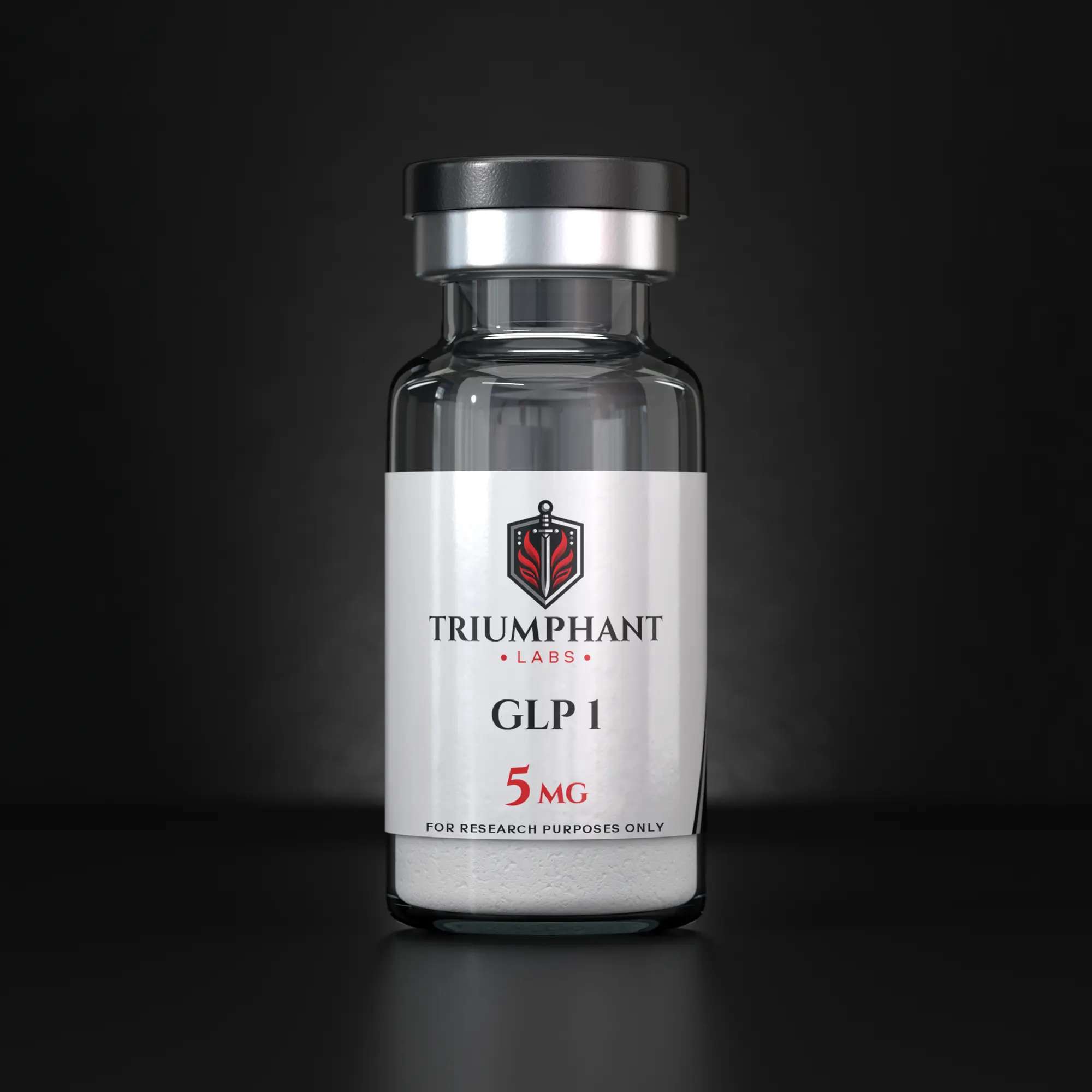
GLP 1


$49.00
GLP-1, or Glucagon-Like Peptide-1, is a naturally occurring incretin hormone at the center of some of the most significant metabolic research of the past two decades. This research-grade formulation offers scientists and advanced wellness researchers a reliable compound for exploring glucose regulation, appetite signaling, insulin secretion biology, and the broader landscape of metabolic and cardiometabolic research.
Glucagon-Like Peptide-1, commonly referred to as GLP-1, is an endogenous incretin hormone produced primarily by L-cells in the small intestine in response to nutrient intake. As a naturally occurring signaling molecule, GLP-1 plays a central role in the coordination of postprandial glucose metabolism, appetite regulation, and insulin secretion. Over the past two decades it has become one of the most intensively studied peptides in metabolic science, serving both as a research subject in its own right and as the biological template for an entire class of synthetic receptor agonists that have transformed the scientific and clinical conversation around obesity and type 2 diabetes biology.
Research Interests and Potential Applications
GLP-1 research spans a broad and rapidly expanding range of biological areas, reflecting its central role in metabolic homeostasis and its emerging associations with systems beyond glucose regulation. Scientific investigation has explored its relevance in relation to:
Insulin secretion and glucose-dependent insulinotropic activity, the foundational area of GLP-1 research where its role in stimulating pancreatic beta cell insulin release in response to elevated blood glucose has been extensively characterized. Appetite regulation and satiety signaling, with studies examining how GLP-1 receptor activation in the brain and gut influences hunger cues, food intake behavior, and energy balance.
Gastric motility, where GLP-1 is understood to slow gastric emptying, contributing to more gradual nutrient absorption and moderated postprandial glucose excursions. Cardiometabolic health, an area of growing research interest exploring GLP-1 receptor signaling beyond metabolic function and into cardiovascular biology, inflammation, and vascular protection. Neuroprotective biology, an emerging and compelling research frontier where GLP-1 receptor expression in the brain has prompted investigation into its potential relevance to neurological health and cognitive function.
Mechanism and Commonly Discussed Function
GLP-1 exerts its biological effects through binding to the GLP-1 receptor, a G-protein coupled receptor expressed in multiple tissues including the pancreas, brain, heart, kidneys, and gastrointestinal tract. In the pancreas, receptor activation stimulates insulin secretion in a glucose-dependent manner, meaning its insulinotropic effect is amplified when blood glucose is elevated and diminished as glucose normalizes. This glucose-dependent mechanism is a central feature of GLP-1 biology and a key point of scientific interest given its implications for understanding safe and nuanced metabolic regulation.
Beyond the pancreas, GLP-1 receptor signaling in the hypothalamus and brainstem is understood to contribute to appetite suppression and the promotion of satiety, connecting metabolic hormone activity to central nervous system regulation of food intake. The breadth of GLP-1 receptor expression across organ systems has made this peptide a particularly rich subject for researchers interested in understanding how a single signaling molecule can coordinate complex and interconnected physiological responses.
Why the Research and Wellness Community Is Interested
GLP-1 sits at the absolute center of contemporary metabolic research. The success of synthetic GLP-1 receptor agonists in clinical and research settings has dramatically amplified scientific interest in the native hormone itself, prompting deeper investigation into its endogenous mechanisms, receptor biology, and the full scope of its physiological roles. Researchers studying obesity biology, insulin resistance, appetite neuroscience, and cardiometabolic risk have all found GLP-1 to be an indispensable subject of investigation.
Within advanced wellness communities, the conversation around GLP-1 has expanded well beyond pharmaceutical applications into broader discussions of metabolic health optimization, gut-brain signaling, and the biology of hunger and satiety. This expanding interest across both scientific and wellness contexts has positioned GLP-1 as one of the most relevant and widely discussed peptides in modern biology.
Product Quality and Formulation
This GLP-1 is produced to research-grade standards with verified peptide sequence accuracy, rigorous purity assessment, and consistent potency per vial. Given the central importance of GLP-1 in metabolic research, synthesis precision and quality control are prioritized at every stage of production to ensure researchers receive a reliable and well-characterized compound suitable for demanding and reproducible scientific work.
GLP-1 remains one of the most scientifically significant and broadly relevant peptides available for research today. For scientists and advanced wellness professionals exploring metabolic biology, appetite science, insulin secretion mechanisms, and the expanding frontier of GLP-1 receptor research, this formulation provides a premium and dependable foundation for serious and meaningful scientific investigation.
Be the first to review “GLP 1”
Related products


Fat Loss Peptides




Reviews
There are no reviews yet.