
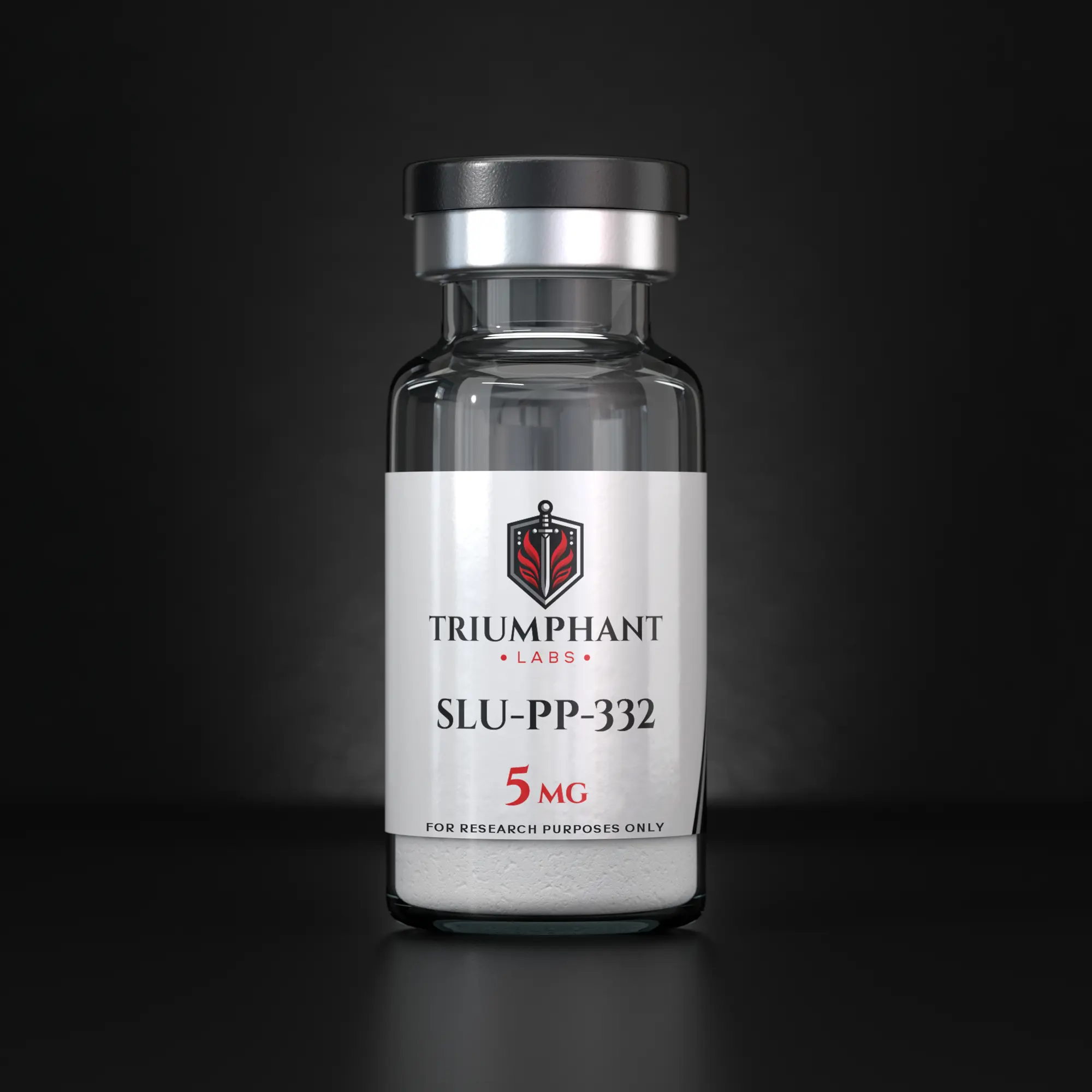
SLU-PP-332 5mg
$105.00
SLU-PP-332 is a synthetic small molecule compound emerging as a significant subject of interest in metabolic and exercise biology research, studied for its potential to activate estrogen-related receptors and mimic aspects of the physiological response to endurance exercise. This 5mg research-grade formulation has attracted notable scientific attention among researchers exploring mitochondrial biogenesis, oxidative metabolism, skeletal muscle biology, and the molecular mechanisms underlying exercise adaptation and metabolic resilience.
SLU-PP-332 is a synthetic pan-agonist of the estrogen-related receptor family, specifically targeting ERR alpha, ERR beta, and ERR gamma, a group of nuclear receptors that play central roles in regulating mitochondrial function, oxidative metabolism, and the transcriptional programs governing energy production in metabolically active tissues.
Developed and initially characterized by researchers at Washington University in St. Louis, SLU-PP-332 has generated considerable scientific interest as a pharmacological tool for studying the biology of endurance exercise adaptation at the molecular level. Its proposed ability to activate ERR-driven transcriptional programs that overlap significantly with those induced by sustained aerobic exercise has positioned it within the growing and scientifically compelling category of exercise mimetic research compounds.
Research Interests and Potential Applications
SLU-PP-332 has rapidly developed a focused and forward-looking research profile across several interconnected areas of metabolic and exercise biology. Scientific investigation has explored its potential relevance in relation to:
Estrogen-related receptor pharmacology, the foundational area of SLU-PP-332 research where its pan-ERR agonist activity and the downstream transcriptional consequences of simultaneous ERR alpha, beta, and gamma activation have been characterized in preclinical models. Mitochondrial biogenesis and oxidative capacity research, with studies examining how ERR activation by SLU-PP-332 influences the expression of genes involved in mitochondrial proliferation, electron transport chain assembly, and overall oxidative metabolic capacity in skeletal muscle and other tissues.
Exercise mimetic biology, a particularly compelling area of scientific inquiry where SLU-PP-332 has been investigated for its ability to recapitulate aspects of the molecular signature of endurance exercise training, including shifts toward oxidative fiber types and enhanced fatty acid oxidation capacity. Metabolic health and obesity research, with preclinical investigations exploring how sustained ERR activation influences body composition, energy expenditure, and metabolic efficiency in models of diet-induced metabolic dysregulation. Cardiac and skeletal muscle biology, where ERR-driven transcriptional programs are understood to play fundamental roles in maintaining the oxidative capacity and metabolic flexibility of muscle tissue under both normal and stress conditions.
Mechanism and Commonly Discussed Function
SLU-PP-332 exerts its proposed biological effects through direct binding to and activation of all three estrogen-related receptor subtypes, ERR alpha, ERR beta, and ERR gamma, which function as ligand-activated transcription factors regulating the expression of a large network of genes involved in mitochondrial biology and oxidative metabolism. ERRs are constitutively active orphan nuclear receptors, meaning they do not require endogenous ligand binding for baseline activity, but their transcriptional output can be significantly amplified by synthetic agonists such as SLU-PP-332.
The transcriptional programs activated by ERR agonism overlap substantially with those induced by PGC-1 alpha, the master regulator of mitochondrial biogenesis and oxidative metabolism that is itself a primary downstream effector of endurance exercise signaling. By activating ERRs directly, SLU-PP-332 is proposed to engage these PGC-1 alpha associated transcriptional networks and drive increases in mitochondrial density, oxidative enzyme expression, and fatty acid oxidation capacity in a manner that parallels the adaptive response of muscle tissue to regular aerobic training.
This mechanistic alignment with exercise-induced biology is the central scientific rationale for its characterization as an exercise mimetic research compound.
Preclinical studies have reported observations including increased running endurance, shifts in skeletal muscle fiber type composition toward more oxidative profiles, and improvements in markers of metabolic efficiency in animal models treated with SLU-PP-332, findings that have generated significant interest and prompted ongoing investigation into the full scope of its biological activity.
Why the Research and Wellness Community Is Interested
The search for compounds capable of recapitulating the metabolic benefits of exercise at the molecular level has been a long-standing goal of metabolic and pharmacological research, driven by the recognition that the biological adaptations induced by regular physical activity represent some of the most potent and broadly beneficial changes achievable in human physiology. SLU-PP-332’s proposed mechanism as a pan-ERR agonist places it at the frontier of this research effort, offering scientists a pharmacological tool for dissecting the molecular pathways through which exercise confers its metabolic benefits and exploring whether these pathways can be engaged independently of physical activity itself.
For researchers in metabolic biology, muscle physiology, and mitochondrial medicine, SLU-PP-332 represents a valuable and timely research tool that has arrived at a moment of growing scientific and public interest in exercise biology, metabolic resilience, and the search for interventions that can address the metabolic consequences of physical inactivity and age-related decline in oxidative capacity. Within advanced wellness and longevity communities, its profile as a potential exercise mimetic has attracted considerable attention from those exploring the frontiers of metabolic optimization and healthy aging biology.
Product Quality and Formulation
This SLU-PP-332 is produced to research-grade standards with verified compound identity, rigorous purity assessment, and confirmed potency per 5mg vial. Given the precision required for meaningful ERR pharmacology and exercise mimetic research, synthesis accuracy and quality control are prioritized throughout every stage of production. Researchers can rely on a well-characterized and consistent compound that meets the demands of serious and reproducible scientific investigation at the frontier of metabolic and exercise biology research.
SLU-PP-332 stands as one of the most scientifically compelling exercise mimetic research compounds to emerge from the metabolic biology field in recent years. For scientists and advanced wellness professionals exploring estrogen-related receptor pharmacology, mitochondrial biogenesis, oxidative metabolism, and the molecular landscape of exercise adaptation and metabolic resilience, this formulation provides a premium and dependable research foundation for work at the very leading edge of contemporary metabolic science.
Be the first to review “SLU-PP-332 5mg”
Related products
Fat Loss Peptides
Reviews
There are no reviews yet.