
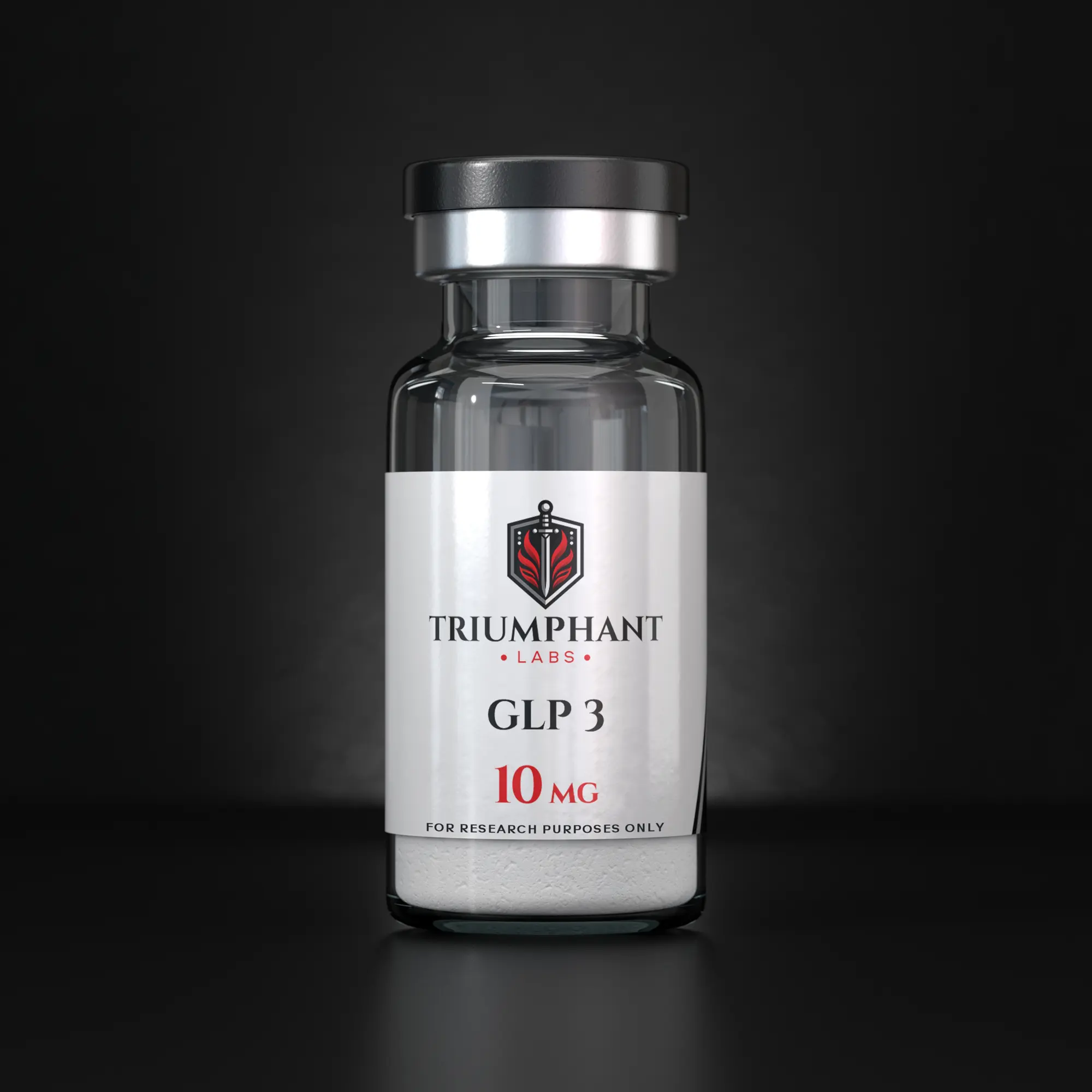
GLP 3

$99.00
GLP-3, or Glucagon-Like Peptide-3, is an emerging peptide derived from the proglucagon gene family, sharing structural origins with GLP-1 and GLP-2 while representing a distinct and relatively underexplored area of incretin biology. This research-grade formulation offers scientists a compelling opportunity to investigate the lesser-characterized members of the glucagon peptide family and their potential roles in metabolic and gastrointestinal signaling.
Glucagon-Like Peptide-3, referred to as GLP-3, is a peptide encoded within the proglucagon gene, the same genetic source that gives rise to glucagon, GLP-1, and GLP-2. While GLP-1 and GLP-2 have each developed extensive and well-characterized research profiles over several decades, GLP-3 remains a comparatively early-stage subject of scientific investigation, making it one of the more intriguing frontier compounds in contemporary peptide biology. Its structural relationship to the better-studied glucagon family members has prompted researchers to ask meaningful questions about its potential biological roles, receptor interactions, and functional significance within the broader incretin and enteroendocrine system.
Research Interests and Potential Applications
As a relatively undercharacterized member of the proglucagon peptide family, GLP-3 presents a genuinely open research landscape. Current and emerging scientific interest has begun to explore its potential relevance in areas including:
Proglucagon peptide biology, where GLP-3 is studied in the context of understanding the full repertoire of bioactive fragments produced from proglucagon processing and their respective physiological roles. Incretin system research, with investigators examining whether GLP-3 participates in or modulates the enteroendocrine signaling network alongside its better-characterized family members.
Gastrointestinal biology, an area of natural interest given GLP-3’s shared genetic origins with GLP-2, a peptide with well-established roles in intestinal mucosal maintenance and gut epithelial function. Metabolic signaling research, where the structural similarities between GLP-3 and other glucagon family peptides have prompted early investigation into its potential interactions with metabolic regulatory pathways. Receptor pharmacology and selectivity studies, a fundamental area of peptide research in which GLP-3 serves as a useful tool for probing the specificity and cross-reactivity of glucagon family receptors.
Mechanism and Commonly Discussed Function
The mechanistic profile of GLP-3 is an area of active and ongoing scientific inquiry. Unlike GLP-1 and GLP-2, which have clearly defined receptor targets and well-characterized downstream signaling cascades, GLP-3’s precise receptor interactions and biological functions have not yet been fully elucidated. This places it in a category of peptides where the primary research value lies in exploration and characterization rather than confirmation of established mechanisms.
What is understood is that GLP-3 shares structural features with other proglucagon-derived peptides, and research has begun to examine whether these structural similarities translate into functional overlap, unique receptor binding profiles, or entirely novel biological activities. The question of whether GLP-3 acts as an independent signaling molecule, a modulator of existing incretin pathways, or serves other regulatory functions within the enteroendocrine system remains an open and scientifically meaningful area of investigation.
Why the Research and Wellness Community Is Interested
The proglucagon gene family has proven to be one of the most biologically productive research areas in modern peptide science, generating insights that have reshaped understanding of metabolic regulation, gut biology, and appetite control. Against this backdrop, GLP-3 represents an intriguing gap in scientific knowledge, a structurally related peptide whose functional identity has not yet been fully mapped. For researchers drawn to frontier science and the opportunity to contribute to the early characterization of a biologically relevant compound, GLP-3 offers a genuinely distinctive research proposition.
The broader context of expanding interest in incretin biology, gut-brain signaling, and proglucagon peptide pharmacology has created a natural environment in which GLP-3 research is poised to grow. As analytical tools and peptide research methodologies continue to advance, the scientific community is increasingly well-positioned to explore the lesser-characterized members of well-known peptide families with the rigor they deserve.
Product Quality and Formulation
This GLP-3 is produced to research-grade standards with verified peptide sequence accuracy, rigorous purity assessment, and consistent potency per vial. Given the frontier nature of GLP-3 research and the importance of compound integrity in early-stage characterization work, synthesis precision and quality control are prioritized throughout every stage of production. Researchers can rely on a well-characterized and consistent compound that meets the demands of serious and reproducible scientific investigation.
GLP-3 represents one of the more genuinely novel research opportunities within the well-established glucagon peptide family. For scientists exploring the frontiers of incretin biology, proglucagon peptide pharmacology, and the uncharted territories of enteroendocrine signaling, this formulation provides a premium and dependable research foundation for work at the leading edge of peptide science.
Be the first to review “GLP 3”
Related products



Fat Loss Peptides





Reviews
There are no reviews yet.