
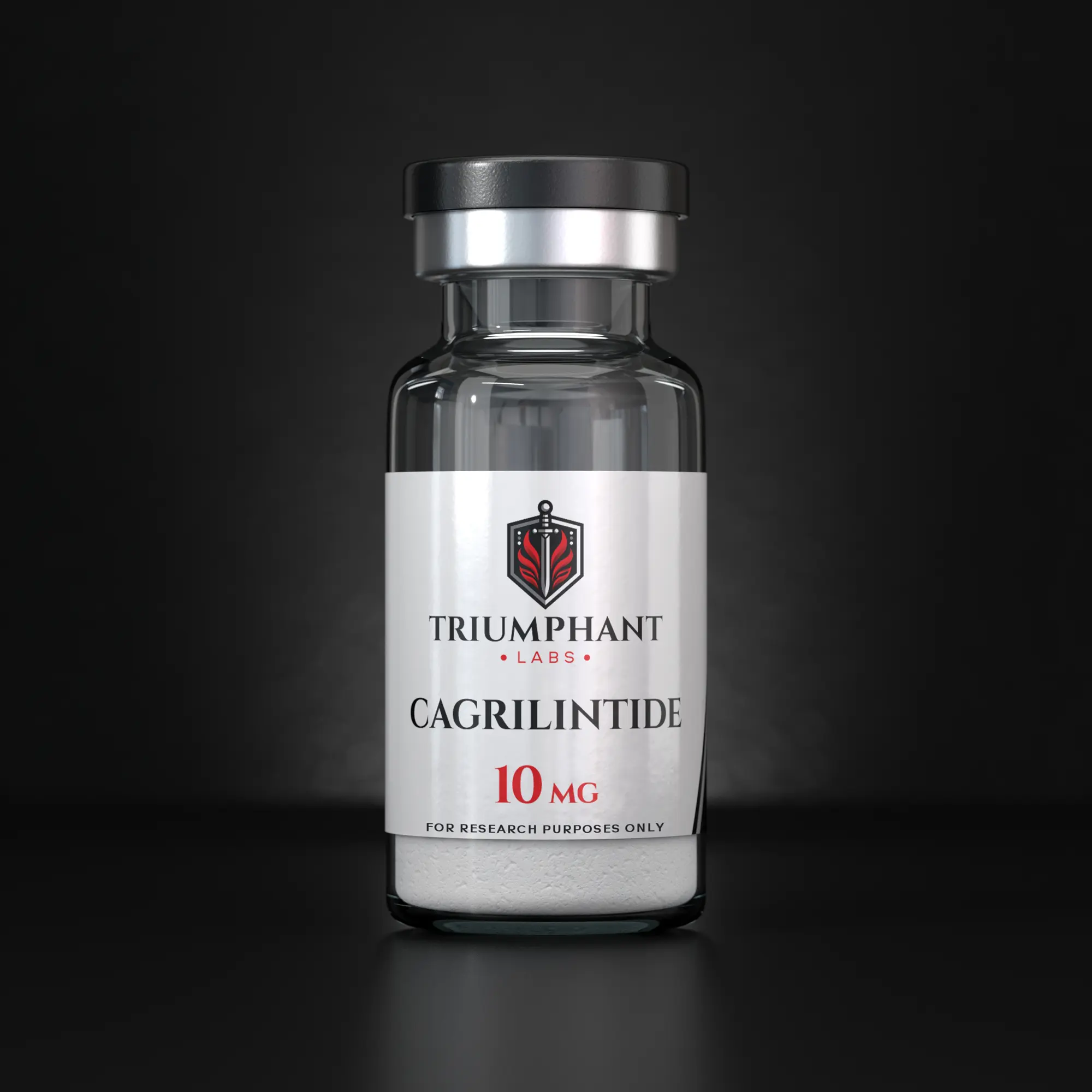
Cagrilintide 10mg
$100.00
Cagrilintide is a long-acting amylin analogue currently at the forefront of metabolic and weight management research. As interest in next-generation peptide therapeutics grows, this 10mg research-grade formulation offers scientists and advanced wellness researchers a reliable compound for exploring appetite regulation, glucose homeostasis, and the broader landscape of metabolic biology.
Cagrilintide is a synthetic long-acting analogue of amylin, a peptide hormone naturally co-secreted with insulin by the pancreatic beta cells. Designed for extended half-life and improved receptor engagement compared to native amylin, cagrilintide has emerged as one of the most closely watched compounds in contemporary metabolic research. Its profile sits at the intersection of appetite regulation, energy balance, and glucose control, making it highly relevant to researchers exploring obesity biology, cardiometabolic health, and next-generation therapeutic peptides.
Research Interests and Potential Applications
Cagrilintide has attracted considerable attention across multiple areas of metabolic science. Preclinical and clinical-stage research has explored its potential relevance in relation to:
Appetite suppression and satiety signaling, with studies examining how amylin receptor activation influences food intake and hunger cues. Body weight reduction, a primary area of investigation given its proposed effects on energy balance and caloric regulation. Glucose homeostasis, including its potential to slow gastric emptying and moderate postprandial glucose excursions. Cardiometabolic risk factors, where researchers have noted interest in its broader systemic effects beyond weight and appetite alone. Combination peptide therapy, particularly its emerging profile alongside GLP-1 receptor agonists as a dual-mechanism approach to metabolic research.
Mechanism and Commonly Discussed Function
Cagrilintide exerts its proposed effects primarily through agonism at amylin receptors, which are found in key regions of the brain involved in energy homeostasis, including the hypothalamus and brainstem. Amylin signaling is understood to complement insulin action by contributing to the regulation of appetite, gastric motility, and glucose output from the liver. The long-acting design of cagrilintide is intended to provide sustained receptor engagement, offering researchers a tool to study prolonged amylin pathway activation and its downstream metabolic effects over extended observation periods.
Its structural modifications compared to native amylin are a key point of research interest, as they appear to improve both stability and tolerability in preclinical models, two factors that have historically limited research with native amylin analogues.
Why the Research and Wellness Community Is Interested
Metabolic health has become one of the defining frontiers of modern peptide research, and cagrilintide occupies a prominent position within that conversation. As the scientific community continues to investigate multi-target approaches to weight management and glucose regulation, the amylin pathway has gained renewed attention as a complementary system to GLP-1 and insulin-based mechanisms. Cagrilintide’s potential to act synergistically within a broader metabolic framework has made it particularly compelling for researchers building a comprehensive picture of appetite and energy biology.
Advanced wellness communities and longevity researchers have also taken notice, as interest in peptide-based metabolic support continues to expand beyond traditional pharmaceutical contexts into broader scientific exploration.
Product Quality and Formulation
This cagrilintide is produced to research-grade standards with careful attention to peptide sequence accuracy, purity verification, and consistent potency per vial. Each 10mg unit is formulated to support rigorous and reproducible research applications. Synthesis and quality control processes are held to a high standard to ensure researchers receive a compound that meets the demands of serious scientific inquiry.
Cagrilintide represents one of the most significant developments in amylin-based peptide research in recent years. For researchers and advanced science professionals exploring the cutting edge of metabolic biology, appetite science, and next-generation peptide therapeutics, this formulation provides a premium, research-grade foundation for meaningful investigation.
Be the first to review “Cagrilintide 10mg”
Related products
Fat Loss Peptides
Reviews
There are no reviews yet.