
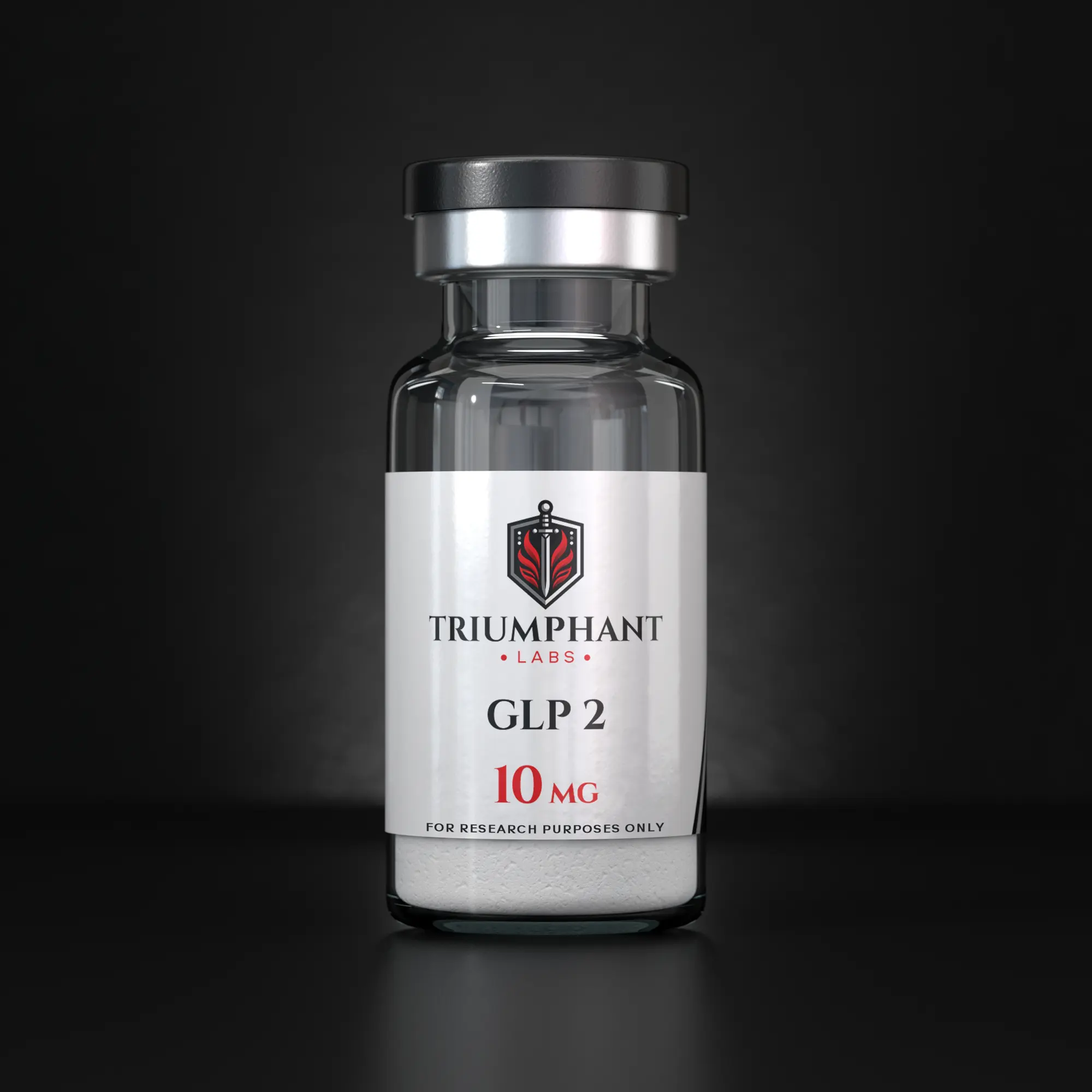
GLP 2


$89.00
GLP-2, or Glucagon-Like Peptide-2, is a naturally occurring intestinal hormone with a highly specialized and well-documented research profile centered on gut health, intestinal integrity, and mucosal biology. This research-grade formulation has attracted growing scientific interest among researchers exploring gastrointestinal repair, nutrient absorption, intestinal barrier function, and the broader landscape of enteric peptide signaling.
Glucagon-Like Peptide-2, commonly referred to as GLP-2, is an endogenous peptide hormone co-secreted alongside GLP-1 by enteroendocrine L-cells in the small intestine following nutrient ingestion. While GLP-1 has dominated metabolic research headlines in recent years, GLP-2 has quietly built one of the most compelling and specialized research profiles in gastrointestinal biology. Its primary biological role is understood to center on the maintenance, repair, and growth of the intestinal epithelium, making it a uniquely focused research tool for scientists investigating gut health, mucosal integrity, and the biology of the gastrointestinal tract.
Research Interests and Potential Applications
GLP-2 research is concentrated in a distinct and scientifically rich area of biology, with investigations spanning several interconnected aspects of gastrointestinal function and mucosal health. Scientific study has explored its potential relevance in relation to:
Intestinal epithelial growth and repair, the foundational area of GLP-2 research where its role in stimulating intestinal mucosal proliferation and reducing epithelial cell apoptosis has been extensively characterized in preclinical models. Intestinal barrier function, with studies examining how GLP-2 receptor signaling influences tight junction integrity and the permeability of the gut lining, areas of considerable interest in modern gastrointestinal research.
Nutrient absorption, where GLP-2 is understood to enhance the absorptive capacity of the small intestine through increases in villus height and mucosal surface area. Inflammatory bowel biology, an area of active investigation exploring how GLP-2 mediated mucosal repair and barrier support may interact with inflammatory processes within the gastrointestinal environment. Gut motility regulation, with research noting GLP-2’s proposed influence on intestinal transit and its potential role in coordinating digestive function alongside its mucosal effects.
Mechanism and Commonly Discussed Function
GLP-2 exerts its biological effects through binding to the GLP-2 receptor, a G-protein coupled receptor expressed predominantly in the gastrointestinal tract, including the small intestine, colon, and enteric nervous system. Receptor activation is understood to initiate a signaling cascade that promotes intestinal crypt cell proliferation, inhibits enterocyte apoptosis, and supports the structural integrity of the mucosal lining. These combined effects contribute to an overall expansion and strengthening of the intestinal epithelium, which underpins GLP-2’s well-characterized trophic activity in the gut.
Research has also pointed to GLP-2’s proposed influence on mucosal blood flow and its potential interactions with the enteric nervous system, suggesting that its effects on gastrointestinal function extend beyond simple epithelial growth into broader coordination of gut physiology. The localized and highly specific nature of GLP-2 receptor expression in the gastrointestinal tract has made it a particularly useful research tool for scientists seeking to study intestinal biology with a degree of tissue specificity that is not always achievable with more broadly distributed signaling molecules.
Why the Research and Wellness Community Is Interested
Gut health has emerged as one of the most significant and rapidly expanding areas of modern biological research, driven by growing recognition of the gut’s role not only in digestion and nutrient absorption but in immune function, systemic inflammation, and even neurological health. GLP-2 sits at the heart of this conversation as one of the most potent and well-characterized endogenous regulators of intestinal mucosal biology. Its highly specific mechanism and well-documented preclinical profile make it a valuable reference compound for researchers building a comprehensive understanding of gut repair and epithelial homeostasis.
Within advanced wellness communities, interest in intestinal barrier function and gut lining integrity has grown considerably alongside broader awareness of how gastrointestinal health influences systemic wellbeing. GLP-2’s natural origin and well-established biological role in mucosal maintenance have made it a subject of genuine curiosity for researchers and wellness professionals operating at the intersection of gut biology and integrative health science.
Product Quality and Formulation
This GLP-2 is produced to research-grade standards with verified peptide sequence fidelity, rigorous purity assessment, and consistent potency per vial. The biological specificity of GLP-2 research demands a high degree of synthesis accuracy, and quality control at every stage of production is prioritized to ensure researchers receive a reliable and well-characterized compound suitable for precise and reproducible scientific work.
GLP-2 stands as one of the most scientifically focused and biologically specific peptides available for gastrointestinal research today. For scientists and advanced wellness professionals exploring intestinal biology, mucosal repair mechanisms, gut barrier function, and the broader landscape of enteric peptide signaling, this formulation provides a premium and dependable foundation for serious and meaningful scientific investigation.
Be the first to review “GLP 2”
Related products



Fat Loss Peptides

Reviews
There are no reviews yet.