
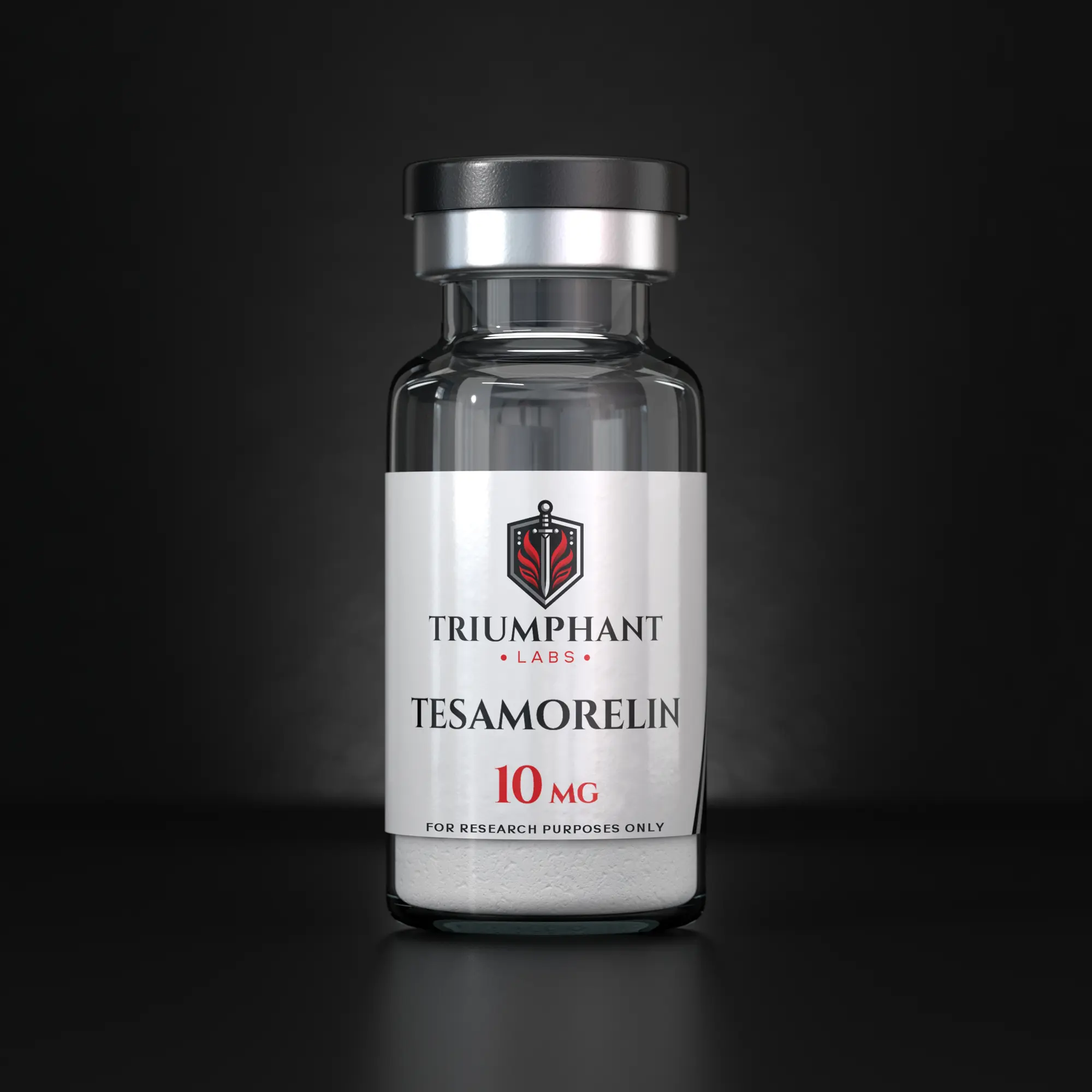
Tesamorelin 10mg
$73.00
Tesamorelin is a stabilized synthetic analogue of growth hormone releasing hormone with a well-characterized and clinically referenced research profile centered on visceral fat reduction, metabolic regulation, and somatotropic biology. This 10mg research-grade formulation has attracted significant scientific interest among researchers exploring GHRH receptor pharmacology, body composition biology, lipid metabolism, and the broader landscape of growth hormone axis research in metabolic and aging contexts.
Tesamorelin is a synthetic analogue of endogenous growth hormone releasing hormone in which the native 44 amino acid GHRH sequence is conjugated to a trans-2-hexenoic acid moiety at the N-terminus, a structural modification that confers enhanced stability against enzymatic degradation while preserving full biological activity at the GHRH receptor. This combination of structural stability and preserved receptor pharmacology has made Tesamorelin one of the most precisely characterized and clinically relevant GHRH analogues available for scientific research.
Its well-defined mechanism, extensive research history, and documented effects on visceral adiposity and metabolic parameters have established it as a uniquely valuable compound for researchers investigating the intersection of growth hormone biology, body composition science, and metabolic health.
Research Interests and Potential Applications
Tesamorelin has developed a focused and exceptionally well-referenced research profile across several interconnected areas of metabolic and somatotropic biology. Scientific investigation has explored its potential relevance in relation to:
Visceral adiposity research, the most extensively studied and clinically characterized area of Tesamorelin investigation, where its effects on the reduction of excess visceral fat accumulation have been examined through both preclinical models and rigorous human research studies, making it one of the most evidence-supported GHRH analogues in the context of body composition science. Growth hormone and IGF-1 axis regulation, with studies examining how Tesamorelin-mediated GHRH receptor activation influences pulsatile GH secretion patterns, downstream IGF-1 elevation, and the broader hormonal environment of the somatotropic axis.
Lipid metabolism and cardiometabolic health research, where Tesamorelin’s influence on triglyceride levels, lipoprotein profiles, and visceral fat associated cardiometabolic risk markers has been investigated in metabolically relevant research populations. Cognitive function and neurological research, an emerging and scientifically compelling area of investigation where growth hormone and IGF-1 signaling in the brain has prompted study of Tesamorelin’s potential relevance to cognitive biology and neurological health markers. HIV associated lipodystrophy research, the clinical context in which Tesamorelin has been most extensively studied in human populations, providing a well-characterized model for understanding its effects on pathological visceral fat accumulation and metabolic dysregulation.
Mechanism and Commonly Discussed Function
Tesamorelin exerts its biological effects through direct binding to and activation of GHRH receptors located on somatotroph cells within the anterior pituitary gland, stimulating the synthesis and pulsatile release of growth hormone in a manner that closely mirrors the physiological action of endogenous GHRH. The trans-2-hexenoic acid modification at its N-terminus provides protection against dipeptidyl peptidase IV mediated cleavage, one of the primary enzymatic pathways through which native GHRH is rapidly degraded in circulation, significantly extending Tesamorelin’s active half-life while preserving its receptor binding fidelity and downstream biological activity.
The growth hormone released in response to Tesamorelin stimulation acts on multiple target tissues, with particular relevance to adipose tissue where GH receptor activation promotes lipolysis, the mobilization and oxidation of stored fat, with preferential effects on visceral adipose deposits. This visceral fat specificity is understood to reflect the higher density of growth hormone receptors in visceral compared to subcutaneous adipose tissue, a biological distinction that has made Tesamorelin’s effects on body composition a particularly precise and well-characterized model for studying GH-mediated lipolytic biology.
Downstream elevation of IGF-1 in response to Tesamorelin-stimulated GH secretion contributes additional anabolic and metabolic effects, including support for lean tissue maintenance and potential influences on insulin sensitivity and glucose metabolism, dimensions of Tesamorelin’s metabolic profile that continue to be active areas of scientific investigation.
Why the Research and Wellness Community Is Interested
Tesamorelin occupies a distinctive and highly regarded position in the GHRH analogue research landscape due to the combination of its structural precision, well-characterized receptor pharmacology, and extensive body of clinical and preclinical research supporting its effects on visceral adiposity and metabolic function. For researchers in metabolic biology, body composition science, and endocrinology, it represents one of the most thoroughly studied tools available for investigating the relationship between GH axis activity and visceral fat metabolism, offering a level of scientific evidence depth that is relatively rare among research peptides.
Within advanced wellness and longevity communities, growing interest in the metabolic consequences of somatotropic aging, visceral adiposity, and the potential for GHRH-based interventions to influence body composition and metabolic health has made Tesamorelin one of the most discussed and sought-after growth hormone axis peptides. Its clinical research background and well-defined mechanism have positioned it as a compound of particular credibility and scientific relevance for researchers and wellness professionals working at the intersection of hormonal biology and metabolic health optimization.
Product Quality and Formulation
This Tesamorelin is produced to research-grade standards with verified full-length GHRH sequence fidelity, confirmed N-terminal trans-2-hexenoic acid conjugation, rigorous purity assessment, and consistent potency per 10mg vial. The structural integrity of both the peptide sequence and the stabilizing N-terminal modification is essential to reliable GHRH receptor engagement and consistent biological performance, and synthesis precision at every stage of production is prioritized to ensure a dependable and well-characterized research compound.
Tesamorelin remains one of the most scientifically rigorous and clinically grounded GHRH analogues available for research today. For scientists and advanced wellness professionals exploring growth hormone axis biology, visceral fat metabolism, body composition science, lipid regulation, and the broader landscape of GHRH receptor pharmacology, this formulation provides a premium and dependable foundation for serious and meaningful scientific investigation.
Be the first to review “Tesamorelin 10mg”
Related products
Fat Loss Peptides
Reviews
There are no reviews yet.