
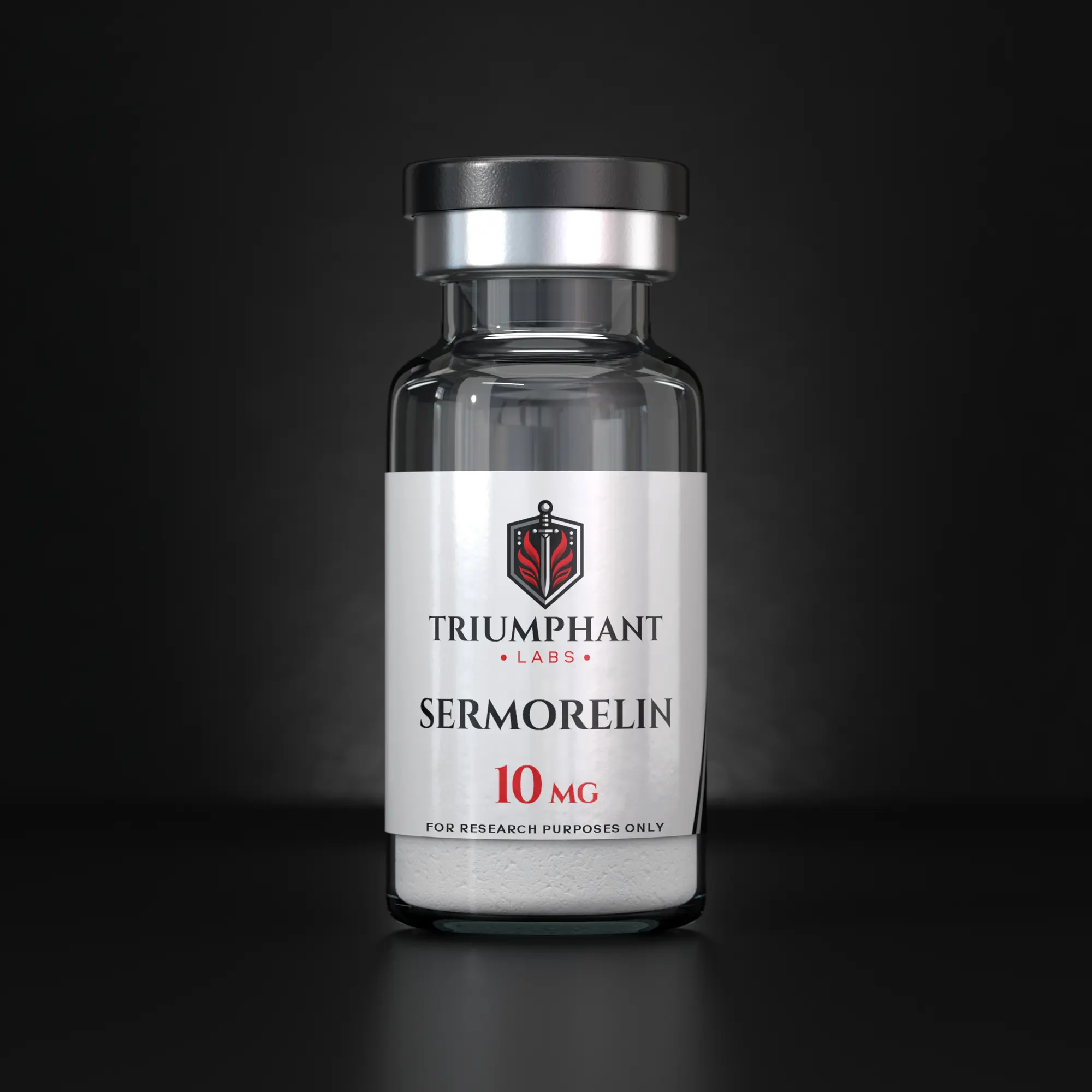
Sermorelin 10mg
$64.00
Sermorelin is a synthetic analogue of growth hormone releasing hormone comprising the first 29 amino acids of the native GHRH sequence, representing the biologically active fragment responsible for pituitary growth hormone stimulation. This 10mg research-grade formulation has attracted sustained scientific interest among researchers exploring growth hormone axis biology, somatotropic function, body composition, and the physiological mechanisms underlying age-related changes in growth hormone secretion.
Sermorelin, chemically designated as GHRH(1-29)NH2, is a synthetic peptide comprising the first 29 amino acids of endogenous growth hormone releasing hormone, the hypothalamic peptide responsible for stimulating growth hormone synthesis and secretion from the anterior pituitary gland. As the shortest fully active fragment of native GHRH capable of stimulating meaningful growth hormone release, Sermorelin occupies a well-defined position in the somatotropic research landscape as a biologically precise and mechanistically clean tool for studying pituitary function and growth hormone axis regulation. Its relatively straightforward mechanism, well-characterized research profile, and long history of scientific investigation have established it as a foundational compound in growth hormone biology research.
Research Interests and Potential Applications
Sermorelin has developed a focused and well-referenced research profile across several interconnected areas of growth hormone and endocrine biology. Scientific investigation has explored its potential relevance in relation to:
Growth hormone secretion and pituitary function research, the primary area of Sermorelin investigation, where its direct stimulation of somatotroph cells in the anterior pituitary has been extensively studied as a model for understanding physiological GH release dynamics and pituitary responsiveness.
Body composition research, including investigations into the potential influence of Sermorelin-stimulated GH elevation on lean muscle tissue, fat metabolism, and the anabolic and lipolytic signaling environment associated with growth hormone activity. Age-related somatotropic decline, a particularly active research area where Sermorelin has been studied as a tool for investigating the biological consequences of diminishing GHRH signaling and declining GH secretion observed with advancing age.
Recovery and tissue repair biology, where growth hormone axis engagement is well understood to play a meaningful supporting role in muscle, connective tissue, and cellular repair and regeneration processes. Sleep quality and slow wave sleep research, areas frequently associated with nocturnal growth hormone secretion and of growing relevance in longevity and recovery biology investigation.
Mechanism and Commonly Discussed Function
Sermorelin works by binding directly to GHRH receptors located on somatotroph cells within the anterior pituitary gland, initiating intracellular signaling cascades that stimulate both the synthesis and pulsatile release of growth hormone. Its mechanism is closely aligned with that of endogenous GHRH, making it a physiologically relevant research model for studying how the hypothalamic-pituitary axis regulates somatotropic function under conditions of direct GHRH receptor stimulation.
A key characteristic of Sermorelin’s research profile is its reliance on the functional capacity of the pituitary gland to produce and release growth hormone in response to GHRH receptor activation. Unlike direct growth hormone administration, Sermorelin works upstream within the regulatory axis, meaning the GH response it produces is subject to the natural feedback mechanisms and somatostatin-mediated inhibition that govern physiological GH secretion. Researchers find this property particularly valuable for studying the integrity of the somatotropic axis and the preserved or diminished pituitary responsiveness to GHRH stimulation across different biological conditions and age groups.
The relatively short half-life of Sermorelin compared to modified GHRH analogues such as CJC-1295 is itself a research-relevant characteristic, as it allows investigators to study acute pituitary responses to GHRH stimulation and the natural decay of GH secretory pulses within research protocols designed to capture the dynamic rather than sustained dimensions of somatotropic regulation.
Why the Research and Wellness Community Is Interested
Sermorelin holds a distinctive position in the growth hormone research landscape as the most biologically faithful synthetic analogue of native GHRH available for scientific investigation. Its direct structural derivation from the active GHRH sequence means that research conducted with Sermorelin offers insights that are closely translatable to the biology of endogenous growth hormone regulation, making it particularly valuable for investigators seeking to understand physiological rather than pharmacological somatotropic dynamics.
Within the longevity and advanced wellness research community, growing interest in the biological mechanisms of somatotropic aging has elevated Sermorelin’s relevance as a tool for studying how GHRH-pituitary signaling changes over time and how preservation or restoration of this axis may relate to broader markers of biological aging and vitality. Its long research history, well-understood mechanism, and close alignment with native GHRH biology have made it a trusted and consistently referenced compound in both academic and applied research settings.
Product Quality and Formulation
This Sermorelin is produced to research-grade standards with verified 29 amino acid sequence fidelity, rigorous purity assessment, and confirmed potency per 10mg vial. The structural accuracy of the GHRH(1-29) fragment is essential to reliable pituitary receptor engagement and consistent GH stimulation in research settings, and every stage of synthesis and quality control is conducted with the precision required to deliver a dependable and well-characterized research compound.
Sermorelin remains one of the most scientifically grounded and biologically relevant GHRH analogues available for research today. For scientists and advanced wellness professionals exploring pituitary function, growth hormone axis biology, somatotropic aging, and the physiological mechanisms underlying GH secretion and regulation, this formulation provides a premium and dependable foundation for serious and meaningful scientific investigation.
Be the first to review “Sermorelin 10mg”
Related products
Reviews
There are no reviews yet.