
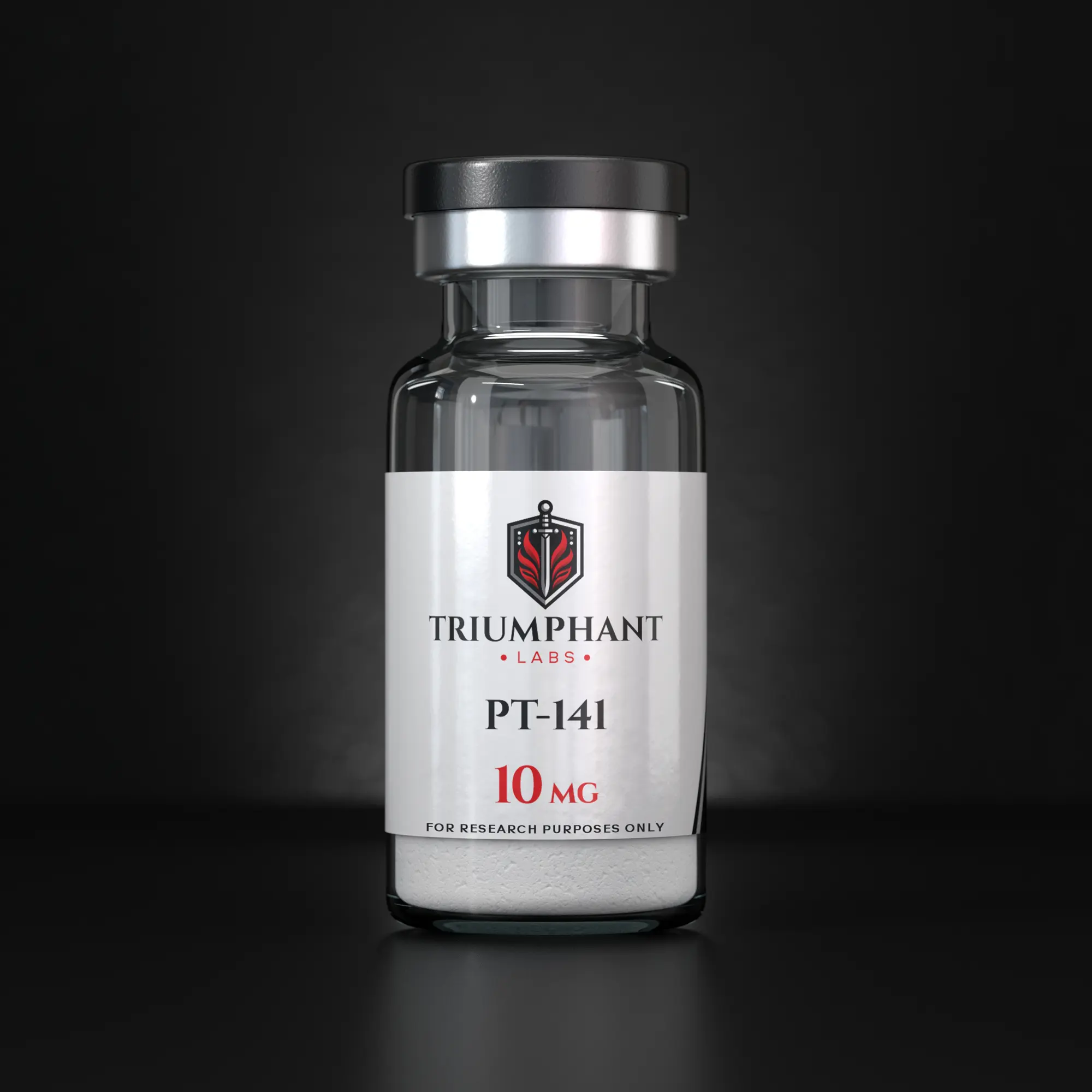
PT-141 10mg
$34.00
PT-141, also known as Bremelanotide, is a synthetic melanocortin receptor agonist with a well-characterized and clinically referenced research profile centered on sexual function, arousal biology, and central nervous system melanocortin signaling. This 10mg research-grade formulation has attracted significant scientific interest among researchers exploring the neurobiology of sexual response, melanocortin receptor pharmacology, and the centrally mediated pathways governing desire and arousal.
PT-141, scientifically designated as Bremelanotide, is a cyclic heptapeptide and synthetic analogue of Melanotan II, itself derived from the naturally occurring hormone alpha-melanocyte stimulating hormone. Originally investigated as part of a broader melanocortin research program, PT-141 distinguished itself through a centrally mediated mechanism of action that differentiates it fundamentally from peripherally acting compounds previously studied in the context of sexual function research. Its development and subsequent clinical investigation have made it one of the most scientifically significant and well-referenced compounds in melanocortin receptor pharmacology and sexual health research.
Research Interests and Potential Applications
PT-141 has developed a focused and well-documented research profile centered primarily on the neurobiology of sexual function and melanocortin receptor mediated central nervous system activity. Scientific investigation has explored its potential relevance in relation to:
Sexual arousal and desire research, the primary and most extensively studied area of PT-141 investigation, where its centrally mediated effects on sexual motivation and arousal pathways have been characterized through both preclinical models and clinical research settings.
Melanocortin receptor pharmacology, where PT-141 serves as a valuable research tool for studying the specific contributions of MC3R and MC4R activation to sexual behavior and arousal biology within the central nervous system. Female sexual dysfunction research, an area of significant clinical and scientific interest where PT-141 has been investigated as a centrally acting compound with a mechanism distinct from hormonally based approaches, offering researchers a novel model for studying desire and arousal biology.
Male sexual function research, including investigations into its potential influence on erectile function through central nervous system pathways that complement rather than replicate the peripheral vascular mechanisms associated with other research compounds in this space. Hypothalamic signaling and behavior, a broader area of neuroscience research where PT-141’s interactions with melanocortin receptors in hypothalamic nuclei offer insights into how central peptide signaling coordinates complex behavioral and physiological responses.
Mechanism and Commonly Discussed Function
PT-141 exerts its biological effects primarily through agonism at melanocortin receptors within the central nervous system, with particular relevance attributed to MC3R and MC4R subtypes expressed in hypothalamic regions associated with sexual behavior and arousal regulation. This central mechanism represents a fundamentally different approach to studying sexual function compared to compounds that act peripherally on vascular or hormonal systems, and it is this distinction that has made PT-141 a particularly compelling and scientifically significant research subject.
Upon receptor activation in the hypothalamus, PT-141 is proposed to initiate downstream neurochemical cascades that influence dopaminergic and other neurotransmitter pathways associated with motivation, reward, and arousal. Research has suggested that melanocortin receptor activation in these brain regions can modulate the neural circuits governing sexual desire through mechanisms that are independent of sex hormone levels, a finding with significant implications for understanding the central neurobiology of sexual function and its dissociation from peripheral hormonal status.
The cyclic peptide structure of PT-141, shared with its parent compound Melanotan II, confers enhanced receptor binding stability and metabolic resistance compared to linear peptide analogues, contributing to its potency and duration of action in research models. Its reduced affinity for MC1R compared to Melanotan II represents a meaningful pharmacological distinction that has informed subsequent research into selective melanocortin receptor targeting.
Why the Research and Wellness Community Is Interested
The neurobiology of sexual function represents an important and relatively underexplored frontier in behavioral neuroscience and translational medicine research. PT-141’s centrally mediated mechanism has distinguished it from earlier generations of compounds studied in this space, opening new research questions about how hypothalamic melanocortin signaling coordinates the complex interplay of neural, hormonal, and behavioral factors that constitute sexual arousal and desire. For researchers in neuroscience, endocrinology, and sexual health biology, PT-141 offers a pharmacologically precise tool for probing these central mechanisms with a level of receptor specificity that has historically been difficult to achieve.
Within advanced wellness communities, growing interest in the neurobiology of desire, intimacy, and sexual wellbeing has paralleled the expanding scientific conversation around PT-141 and melanocortin receptor research. Its well-characterized receptor profile, clinical research history, and centrally acting mechanism have positioned it as one of the most scientifically credible and consistently discussed compounds in this research domain.
Product Quality and Formulation
This PT-141 is produced to research-grade standards with verified cyclic heptapeptide sequence integrity, confirmed structural conformation, rigorous purity assessment, and consistent potency per 10mg vial. The cyclic structure of PT-141 is integral to its receptor binding activity and biological performance, and synthesis precision at every stage of production is prioritized to ensure structural fidelity and consistent research-grade compound quality. Researchers can rely on a well-characterized formulation suitable for demanding and reproducible scientific investigation.
PT-141 remains one of the most scientifically significant and well-referenced synthetic melanocortin analogues available for research today. For scientists and advanced wellness professionals exploring melanocortin receptor pharmacology, sexual function neurobiology, hypothalamic signaling, and the broader landscape of centrally mediated peptide mechanisms, this formulation provides a premium and dependable foundation for serious and meaningful scientific investigation.
Reviews
There are no reviews yet.