
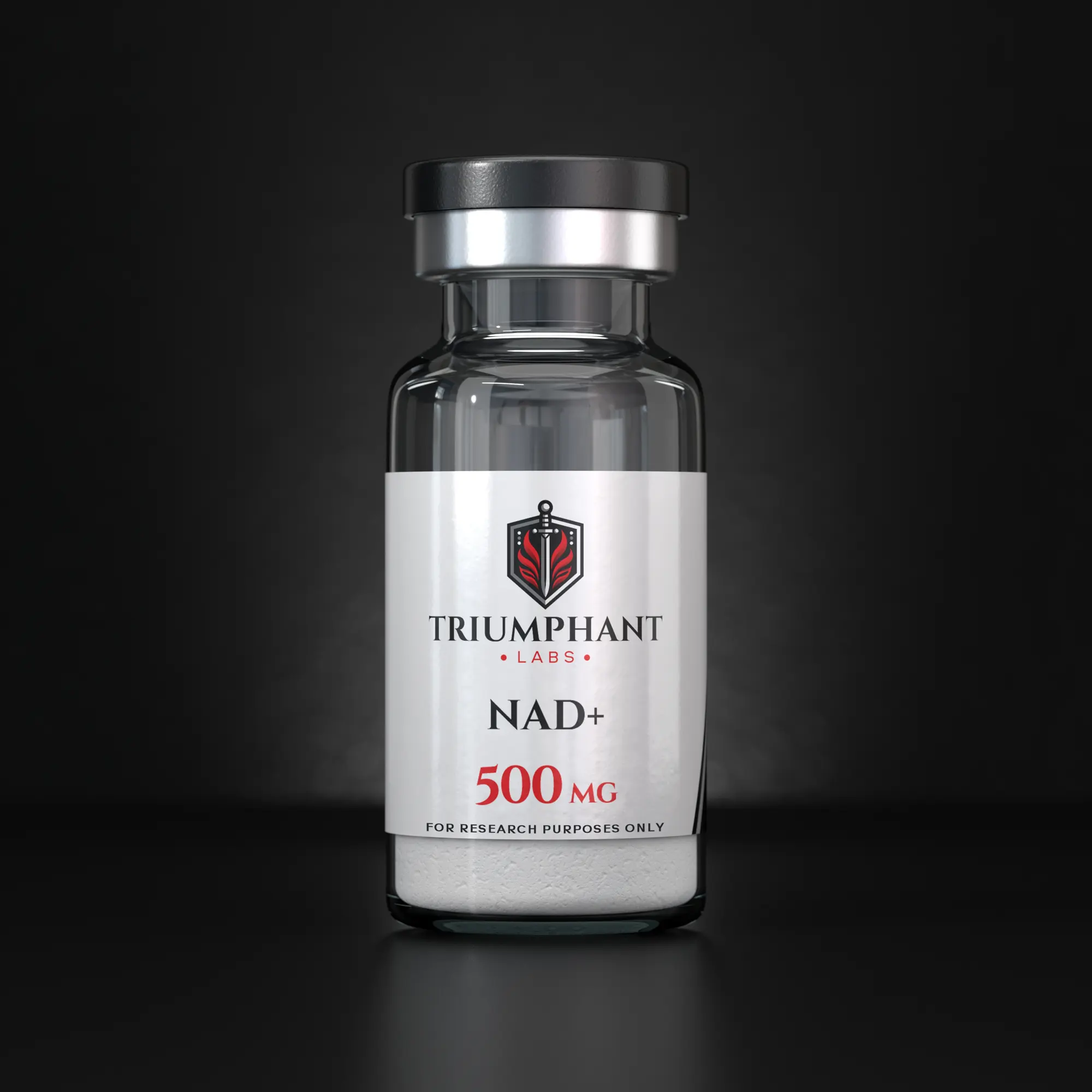
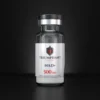
NAD+ 500mg
$78.00
NAD+, or Nicotinamide Adenine Dinucleotide, is one of the most fundamental and widely studied coenzymes in cellular biology, playing a central role in energy metabolism, DNA repair, and cellular aging. This 500mg research-grade formulation has attracted significant scientific interest among researchers exploring mitochondrial function, sirtuin biology, metabolic health, and the molecular mechanisms underlying cellular aging and longevity.
Nicotinamide Adenine Dinucleotide, universally known as NAD+, is a coenzyme found in every living cell and recognized as one of the most essential molecules in biological systems. It serves as a critical electron carrier in cellular respiration and energy production while simultaneously functioning as a substrate for a broad range of enzymes involved in DNA repair, gene expression regulation, and cellular stress response.
The scientific significance of NAD+ extends far beyond its classical role in metabolism, encompassing a rapidly expanding body of research into its function as a central regulator of cellular aging, mitochondrial health, and longevity biology. Its well-documented decline with age has made it one of the most actively investigated molecules in modern geroscience and metabolic research.
Research Interests and Potential Applications
NAD+ has accumulated one of the most expansive and well-referenced research profiles of any biological molecule studied in the context of aging and metabolism. Scientific investigation has explored its relevance across a remarkably broad range of biological areas including:
Cellular energy metabolism, the foundational area of NAD+ biology where its role as an electron carrier in glycolysis, the citric acid cycle, and oxidative phosphorylation has been characterized as essential to ATP production and overall cellular energetics.
Sirtuin activation, a major area of longevity research where NAD+ serves as an obligate substrate for the sirtuin family of deacylase enzymes, which regulate gene expression, mitochondrial biogenesis, and cellular stress responses in ways closely associated with biological aging and healthspan. DNA repair mechanisms, with research examining how NAD+ dependent enzymes including PARP family proteins consume NAD+ to support the detection and repair of DNA strand breaks, a process increasingly recognized as central to genomic stability and cancer biology research.
Mitochondrial function and biogenesis, where NAD+ levels are understood to directly influence the efficiency of the electron transport chain and the signaling pathways governing mitochondrial number, quality, and activity. Age-related NAD+ decline research, a particularly active area of investigation exploring the biological consequences of declining cellular NAD+ concentrations with advancing age and the potential for NAD+ restoration to influence markers of metabolic and cellular aging.
Mechanism and Commonly Discussed Function
NAD+ functions in two primary capacities within the cell. As an electron carrier, it cycles between its oxidized form, NAD+, and its reduced form, NADH, accepting and donating electrons within metabolic pathways to facilitate the conversion of nutrients into ATP, the primary energy currency of the cell. This redox cycling is fundamental to virtually every energy-producing process in living organisms and underpins the essential nature of NAD+ across all biological systems.
As a signaling substrate, NAD+ is consumed by three major classes of enzymes. Sirtuins, a family of seven deacylase proteins in humans, use NAD+ to remove acyl modifications from target proteins, regulating processes including mitochondrial biogenesis via PGC-1 alpha activation, inflammatory signaling, and circadian rhythm coordination.
PARP enzymes consume NAD+ during DNA damage repair, a process that can significantly deplete cellular NAD+ pools under conditions of high genotoxic stress. CD38, a multifunctional enzyme involved in immune signaling and calcium homeostasis, has been identified as a major consumer of NAD+ and a significant contributor to age-associated NAD+ decline, making it an important research target in the context of NAD+ biology and aging.
The interconnection between these enzymatic systems and the finite cellular pool of NAD+ has led researchers to characterize NAD+ metabolism as a central hub of biological regulation, where energy status, DNA integrity, immune function, and longevity signaling are continuously balanced and coordinated.
Why the Research and Wellness Community Is Interested
Few molecules have generated as much sustained scientific excitement across as many biological disciplines as NAD+. Its position at the intersection of energy metabolism, DNA repair, and longevity biology has made it a focal point for researchers in geroscience, mitochondrial medicine, metabolic health, and cancer biology simultaneously. The well-documented decline of cellular NAD+ with age, combined with preclinical evidence suggesting that NAD+ restoration can influence a range of age-associated biological changes, has made it one of the most compelling research targets in modern longevity science.
Within advanced wellness and longevity communities, NAD+ has achieved a level of prominence matched by very few other compounds, driven by growing public and scientific awareness of its central role in cellular health and aging biology. Researchers, clinicians, and wellness professionals exploring mitochondrial optimization, metabolic support, and healthy aging have consistently identified NAD+ as a foundational molecule worthy of serious and sustained scientific attention.
Product Quality and Formulation
This NAD+ is produced to research-grade standards with verified molecular identity, rigorous purity assessment, and consistent potency per 500mg unit. The stability and integrity of NAD+ formulations are particularly important given the molecule’s sensitivity to environmental conditions, and every stage of production, storage, and quality control is conducted with the precision required to deliver a reliable and well-characterized research compound. Researchers can rely on a consistent and high-integrity formulation suitable for demanding and reproducible scientific investigation.
NAD+ remains one of the most scientifically significant and broadly relevant biological molecules available for research today. For scientists and advanced wellness professionals exploring cellular energy metabolism, sirtuin biology, DNA repair mechanisms, mitochondrial function, and the molecular landscape of aging and longevity, this formulation provides a premium and dependable foundation for serious and meaningful scientific investigation.
Be the first to review “NAD+ 500mg”
Related products
Reviews
There are no reviews yet.