
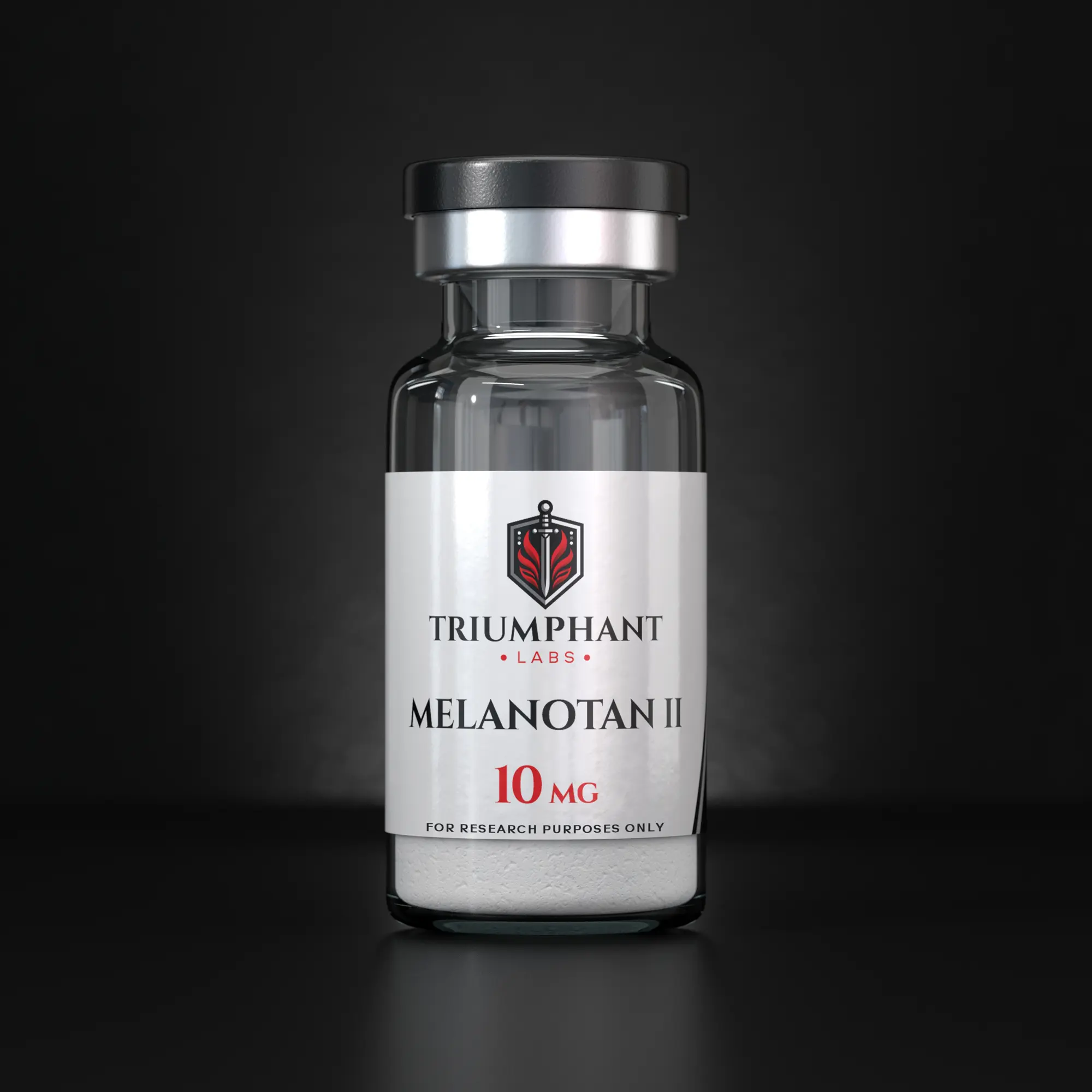
Melanotan II 10mg
$38.00
Melanotan II is a synthetic analogue of alpha-melanocyte stimulating hormone with a well-established and multifaceted research profile spanning pigmentation biology, sexual function research, appetite regulation, and melanocortin receptor pharmacology. This 10mg research-grade formulation has attracted sustained scientific interest among researchers exploring the melanocortin system, skin biology, and the broader landscape of centrally acting peptide mechanisms.
Melanotan II is a cyclic synthetic peptide analogue of alpha-melanocyte stimulating hormone, commonly referred to as alpha-MSH. Originally developed in the 1980s at the University of Arizona as part of a research program investigating compounds capable of stimulating natural melanogenesis, Melanotan II has since evolved into a significantly broader research subject encompassing multiple biological systems. Its potent and non-selective agonist activity across several melanocortin receptor subtypes has made it a uniquely versatile tool for researchers studying the melanocortin system and its wide-ranging influence on pigmentation, energy balance, sexual physiology, and central nervous system function.
Research Interests and Potential Applications
Melanotan II has accumulated a diverse and well-referenced research profile across several interconnected areas of melanocortin biology and systemic physiology. Scientific investigation has explored its potential relevance in relation to:
Melanogenesis and skin pigmentation research, the original and foundational area of Melanotan II investigation, where its ability to stimulate melanin production through melanocortin receptor activation has been extensively characterized in preclinical and early human research models. Sexual function and libido research, a prominent area of investigation where Melanotan II’s centrally mediated effects on sexual arousal pathways have been studied through its proposed interactions with melanocortin receptors in the central nervous system.
Appetite regulation and energy balance, with research examining how melanocortin receptor agonism influences food intake behavior and metabolic signaling through hypothalamic pathways shared with other key appetite regulating hormones. Melanocortin receptor pharmacology, where Melanotan II serves as a valuable non-selective research tool for studying the relative contributions of MC1R, MC3R, MC4R, and MC5R to various biological responses. Inflammation and immune modulation, an area of growing research interest given the documented anti-inflammatory properties associated with melanocortin receptor signaling across multiple tissue types.
Mechanism and Commonly Discussed Function
Melanotan II exerts its biological effects primarily through agonism at melanocortin receptors, a family of five G-protein coupled receptors designated MC1R through MC5R that are expressed across a diverse range of tissues including skin, brain, immune cells, and reproductive organs. Its cyclic peptide structure confers greater receptor binding affinity and metabolic stability compared to the linear native alpha-MSH sequence, contributing to its potency and extended duration of action in research models.
MC1R activation in melanocytes is the mechanism through which Melanotan II stimulates melanogenesis, the cellular process by which melanin pigment is produced and distributed within skin cells. This receptor interaction activates intracellular signaling cascades that upregulate tyrosinase activity and promote eumelanin synthesis, the form of melanin associated with darker pigmentation. In the central nervous system, MC4R activation is understood to play a central role in mediating Melanotan II’s effects on sexual arousal pathways and appetite regulation, connecting peripheral peptide administration to centrally mediated behavioral and physiological responses through hypothalamic signaling networks.
Why the Research and Wellness Community Is Interested
The melanocortin system represents one of the most biologically interconnected signaling networks in human physiology, with receptor subtypes influencing processes as diverse as pigmentation, appetite, sexual function, inflammation, and energy homeostasis. Melanotan II’s broad receptor activity profile makes it an exceptionally useful pharmacological tool for researchers seeking to understand how melanocortin signaling contributes to each of these biological domains. Its well-characterized receptor binding profile and decades of preclinical research history provide a strong scientific foundation for ongoing investigation.
Within the advanced wellness and research communities, interest in melanocortin receptor biology has grown alongside broader curiosity about centrally acting peptides and their influence on human physiology. Melanotan II’s multifaceted biological profile and its historical role as one of the pioneering compounds in melanocortin research continue to make it a consistently relevant and scientifically compelling subject for researchers across multiple disciplines.
Product Quality and Formulation
This Melanotan II is produced to research-grade standards with verified cyclic peptide sequence integrity, confirmed disulfide bridge formation, rigorous purity assessment, and consistent potency per 10mg vial. The cyclic structure of Melanotan II is integral to its receptor binding activity, and synthesis precision at every stage of production is prioritized to ensure structural fidelity and consistent biological performance. Researchers can rely on a well-characterized compound suitable for demanding and reproducible scientific investigation.
Melanotan II remains one of the most scientifically significant and broadly studied synthetic melanocortin analogues available for research today. For scientists and advanced wellness professionals exploring melanocortin receptor pharmacology, pigmentation biology, sexual function research, appetite regulation, and the broader landscape of centrally acting peptide mechanisms, this formulation provides a premium and dependable foundation for serious and meaningful scientific investigation.
Reviews
There are no reviews yet.