
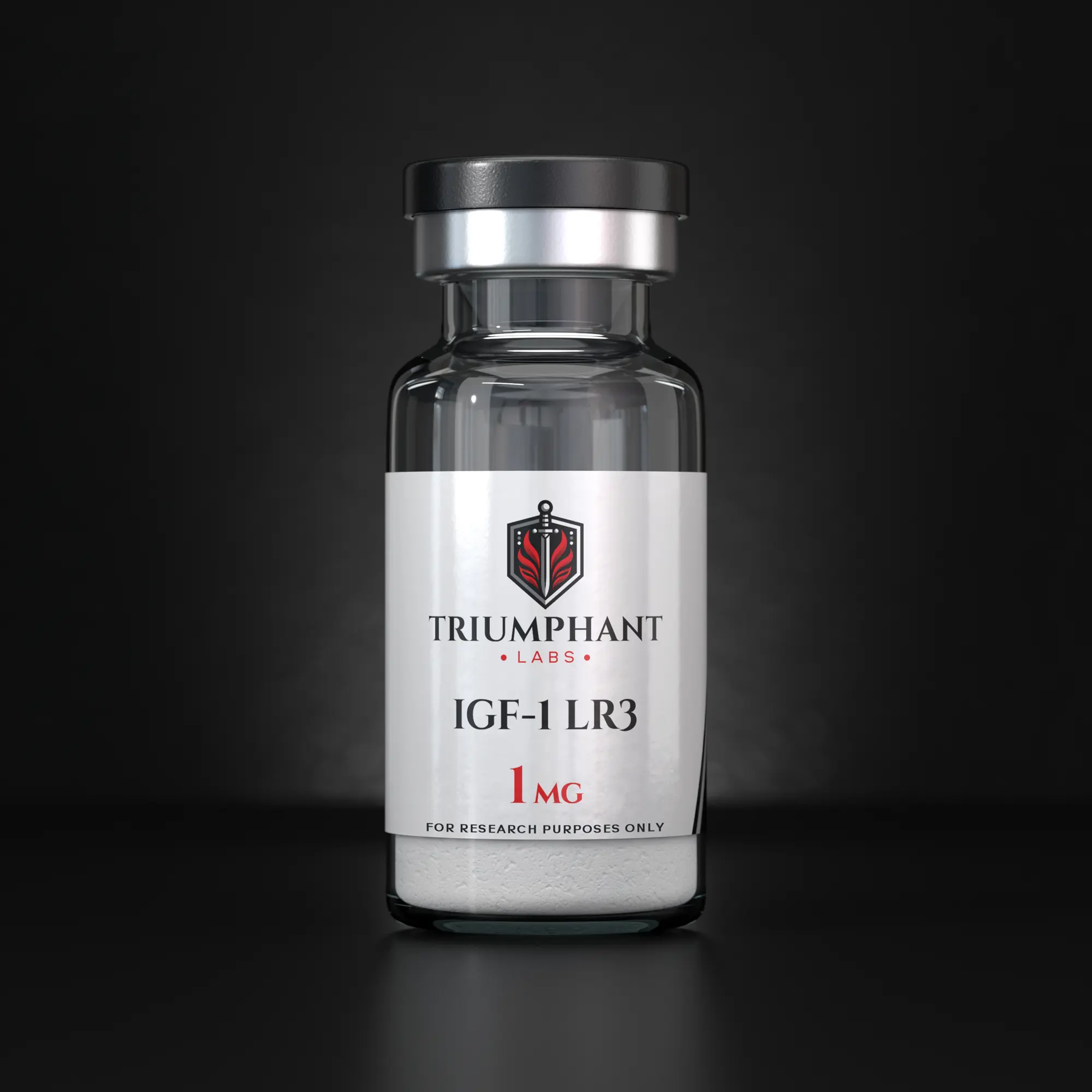
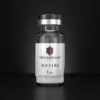
IGF-1 LR3 1mg
$82.00
IGF-1 LR3 is a synthetic long-acting analogue of Insulin-Like Growth Factor 1, engineered for extended bioavailability and enhanced receptor engagement compared to native IGF-1. This 1mg research-grade formulation has become a significant compound of interest for scientists exploring anabolic signaling, muscle biology, cellular growth mechanisms, and the broader landscape of growth factor research.
IGF-1 LR3, or Insulin-Like Growth Factor 1 Long R3, is a synthetic analogue of the naturally occurring IGF-1 peptide, modified through the addition of a 13 amino acid extension at the N-terminus and a single amino acid substitution that together produce a compound with substantially greater biological half-life and reduced binding affinity for IGF binding proteins.
These structural modifications were designed to address key limitations of native IGF-1 in research settings, namely its short half-life and its tendency to be rapidly sequestered by binding proteins in circulation before reaching target tissues. The result is a more bioavailable and longer-acting research tool for studying the IGF-1 signaling axis and its wide-ranging influence on cellular growth, metabolism, and tissue development.
Research Interests and Potential Applications
IGF-1 LR3 has developed a broad and well-referenced research profile across multiple areas of growth factor biology and anabolic science. Scientific investigation has explored its relevance in relation to:
Muscle cell biology and hypertrophy research, the most extensively studied area of IGF-1 LR3 investigation, where its effects on satellite cell activation, myoblast proliferation, and protein synthesis signaling have been examined in preclinical models.
Cellular growth and proliferation, with studies exploring how sustained IGF-1 receptor activation influences cell cycle progression and tissue expansion across multiple cell types. Anabolic signaling pathways, particularly the PI3K and mTOR cascades that sit downstream of IGF-1 receptor activation and serve as central regulators of protein synthesis and cellular anabolism.
Metabolic research, including investigations into how IGF-1 LR3 influences glucose uptake, insulin sensitivity, and nutrient partitioning at the cellular level. Tissue repair and regenerative biology, where IGF-1 receptor signaling is understood to play a meaningful role in supporting the repair and renewal of muscle, connective tissue, and other growth-responsive structures.
Mechanism and Commonly Discussed Function
IGF-1 LR3 exerts its biological effects through binding to the IGF-1 receptor, a tyrosine kinase receptor expressed across a wide range of tissues including muscle, bone, liver, and adipose tissue. Receptor activation initiates downstream signaling through the PI3K and Akt pathways, leading to activation of mTOR, a central regulator of protein synthesis, cell growth, and cellular metabolism. This signaling cascade is one of the most extensively studied in anabolic and growth factor biology, and IGF-1 LR3’s ability to activate it with greater potency and duration than native IGF-1 makes it a particularly valuable research tool.
The structural modification that reduces binding protein affinity is especially significant from a research perspective. Native IGF-1 is rapidly bound by a family of IGF binding proteins in circulation, limiting its free concentration and bioavailability at target tissues. IGF-1 LR3’s reduced affinity for these binding proteins means a greater proportion of the administered compound remains available for receptor interaction, providing researchers with a more consistent and measurable model of sustained IGF-1 receptor engagement.
Why the Research and Wellness Community Is Interested
The IGF-1 signaling axis sits at the intersection of growth, metabolism, and aging biology, making it one of the most consequential and widely studied systems in modern life sciences research. IGF-1 LR3’s enhanced bioavailability and extended activity profile have made it a preferred research tool for scientists seeking to study prolonged IGF-1 receptor signaling without the rapid clearance limitations associated with the native peptide. Its relevance spans muscle biology, metabolic research, regenerative science, and longevity investigation, reflecting the broad importance of the IGF-1 pathway across biological systems.
Within advanced wellness communities, interest in growth factor biology and anabolic signaling has grown considerably alongside expanding knowledge of how these pathways influence body composition, recovery, and biological aging. IGF-1 LR3’s well-characterized profile and distinct advantages over native IGF-1 have made it a consistently sought-after compound for researchers and advanced science professionals working at the frontier of growth factor investigation.
Product Quality and Formulation
This IGF-1 LR3 is produced to research-grade standards with verified peptide sequence fidelity, confirmed structural modifications, rigorous purity assessment, and consistent potency per 1mg vial. The precision required for reliable growth factor research demands the highest standards of synthesis accuracy and quality control, and every stage of production is conducted with the integrity expected by serious investigators in this field. Researchers can rely on a well-characterized compound that performs consistently across demanding and reproducible scientific protocols.
IGF-1 LR3 remains one of the most scientifically significant and practically valuable growth factor analogues available for research today. For scientists and advanced wellness professionals exploring muscle biology, anabolic signaling, cellular growth mechanisms, and the broader landscape of IGF-1 pathway research, this formulation provides a premium and dependable foundation for serious and meaningful scientific investigation.
Be the first to review “IGF-1 LR3 1mg”
Related products
Reviews
There are no reviews yet.