
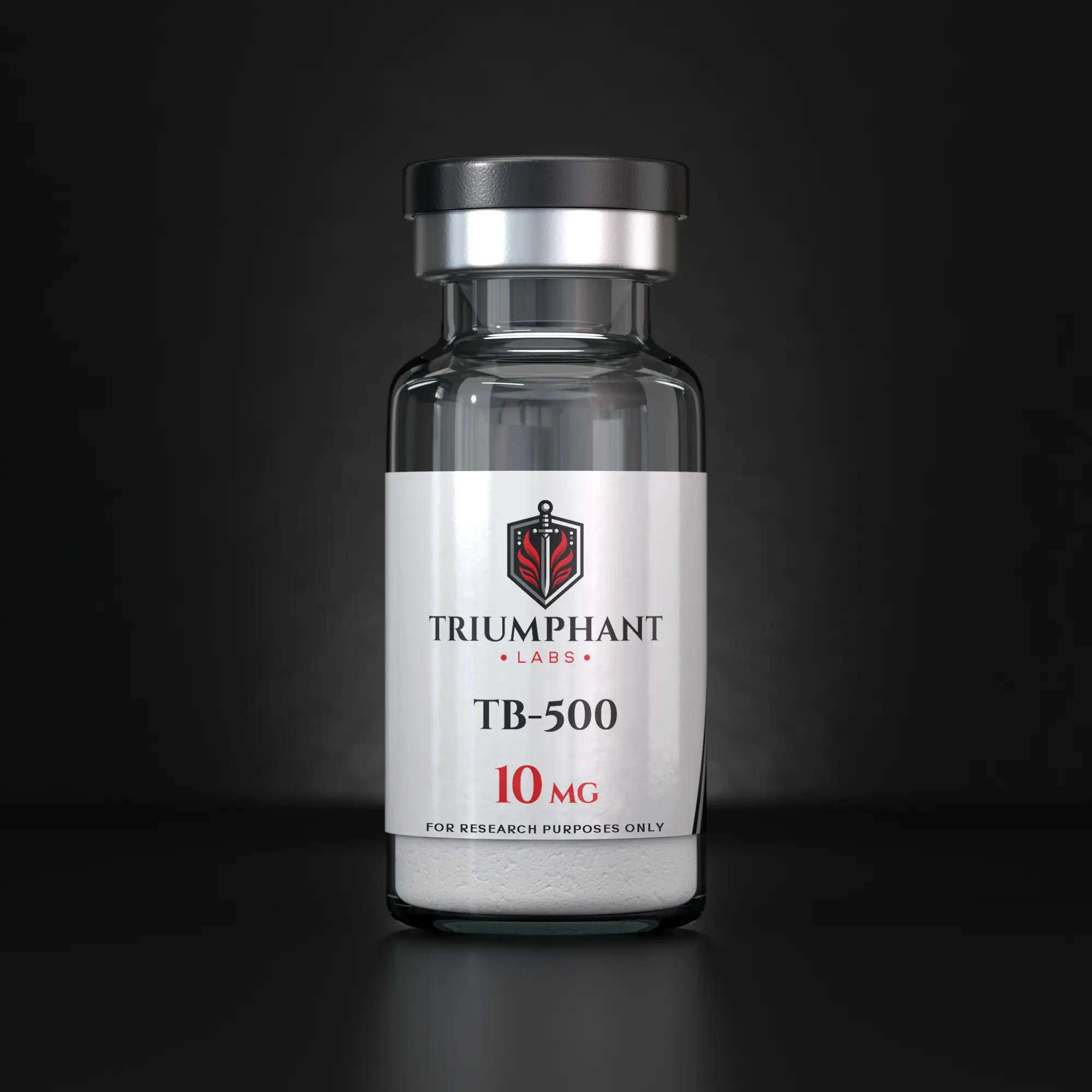
TB-500 10mg
$58.00
TB-500 is a synthetic analogue of Thymosin Beta-4, a naturally occurring protein with a well-established and broadly referenced research profile spanning tissue repair, cellular migration, inflammation modulation, and regenerative biology. This 10mg research-grade formulation has attracted sustained scientific interest among researchers exploring wound healing, musculoskeletal recovery, angiogenesis, and the molecular mechanisms underlying actin-mediated cellular repair and tissue regeneration.
TB-500 is a synthetic peptide analogue derived from the active region of Thymosin Beta-4, an endogenous protein found in virtually all nucleated cells of the human body and recognized as one of the most abundant and biologically significant members of the beta-thymosin family. Thymosin Beta-4 was first identified in thymic tissue and has since been characterized as a multifunctional regulatory protein with central roles in actin dynamics, cell migration, tissue repair, and inflammatory modulation.
TB-500, representing the bioactive fragment of this protein most closely associated with its regenerative properties, has accumulated a compelling and well-referenced research profile that spans multiple tissue types and biological systems, making it one of the most broadly relevant peptides in contemporary regenerative biology research.
Research Interests and Potential Applications
TB-500 has developed an extensive and well-documented research profile across several interconnected areas of tissue repair and regenerative science. Scientific investigation has explored its potential relevance in relation to:
Musculoskeletal repair and recovery research, the most extensively studied area of TB-500 investigation, where its proposed influence on tendon, ligament, and muscle tissue healing has been examined in preclinical models across multiple injury and repair contexts. Wound healing and skin repair biology, with studies exploring how TB-500 influences keratinocyte migration, epithelial repair, and the overall dynamics of wound closure through actin-mediated cellular movement.
Angiogenesis and vascular repair research, an area of active investigation where TB-500’s proposed ability to promote the formation of new blood vessels has been studied for its potential contributions to tissue revascularization and the restoration of nutrient supply to injured areas. Cardiac tissue repair, a particularly compelling area of TB-500 research where preclinical studies have examined its potential relevance to myocardial repair and the regenerative response of cardiac tissue following injury. Neurological repair and neuroprotection, an emerging research frontier where TB-500’s actin-regulating properties and proposed anti-inflammatory activity have prompted investigation into its potential interactions with neural tissue repair processes.
Mechanism and Commonly Discussed Function
TB-500 exerts its proposed biological effects primarily through its interaction with G-actin, the monomeric form of actin that serves as the building block for the dynamic actin filament networks governing cell shape, motility, and structural integrity. By sequestering G-actin and regulating its availability for filament polymerization, TB-500 is understood to influence the migratory capacity of cells involved in tissue repair, including fibroblasts, keratinocytes, endothelial cells, and immune cells. This actin-mediated regulation of cell migration is considered central to TB-500’s regenerative activity, as the ability of repair-competent cells to move efficiently to sites of tissue damage is a fundamental determinant of healing outcomes.
Beyond its direct actin interactions, TB-500 has been studied for its proposed influence on inflammatory signaling, with research suggesting potential modulation of cytokine production and inflammatory pathway activity in ways that may support rather than impede the progression of normal tissue repair. Its proposed pro-angiogenic activity, involving interactions with vascular endothelial growth factor signaling and endothelial cell migration, adds a vascular dimension to its regenerative profile that complements its direct cellular repair mechanisms and has made it a subject of particular interest in wound healing and cardiac repair research.
The broad tissue distribution of Thymosin Beta-4 and its synthetic analogue TB-500 across virtually all nucleated cell types reflects the fundamental importance of actin dynamics to cellular biology across organ systems, and contributes to the wide range of tissue types in which TB-500’s regenerative activity has been investigated.
Why the Research and Wellness Community Is Interested
Regenerative biology has emerged as one of the most scientifically productive and practically relevant research frontiers in modern medicine and wellness science, driven by growing recognition of the body’s endogenous capacity for repair and the potential to support and amplify these natural processes through targeted biological intervention. TB-500’s well-characterized mechanism, natural derivation from an endogenous protein, and broad tissue relevance have made it one of the most consistently cited and sought-after peptides in this space. Its combination of actin-regulatory, pro-angiogenic, and anti-inflammatory properties addresses multiple dimensions of the tissue repair process simultaneously, offering researchers a comprehensive model for studying regenerative biology that reflects the complexity of healing in living systems.
Within advanced wellness communities, TB-500 has attracted sustained interest from athletes, biohackers, and longevity researchers exploring peptide-based approaches to recovery optimization and tissue resilience. Its natural origin, broad preclinical research base, and well-understood mechanism have positioned it as a trusted and scientifically credible compound for serious investigation of regenerative and repair biology.
Product Quality and Formulation
This TB-500 is produced to research-grade standards with verified peptide sequence fidelity, rigorous purity assessment, and confirmed potency per 10mg vial. The biological activity of TB-500 is dependent on the structural integrity of the actin-binding region within its peptide sequence, and synthesis precision at every stage of production is prioritized to ensure consistent and reliable compound performance. Researchers can rely on a well-characterized formulation suitable for demanding and reproducible scientific investigation across the range of tissue types and biological systems in which TB-500’s regenerative properties have been studied.
TB-500 remains one of the most scientifically significant and broadly relevant regenerative peptides available for research today. For scientists and advanced wellness professionals exploring tissue repair biology, musculoskeletal recovery, angiogenesis, wound healing, and the broader landscape of actin-mediated regenerative mechanisms, this formulation provides a premium and dependable foundation for serious and meaningful scientific investigation.
Be the first to review “TB-500 10mg”
Related products
Reviews
There are no reviews yet.