
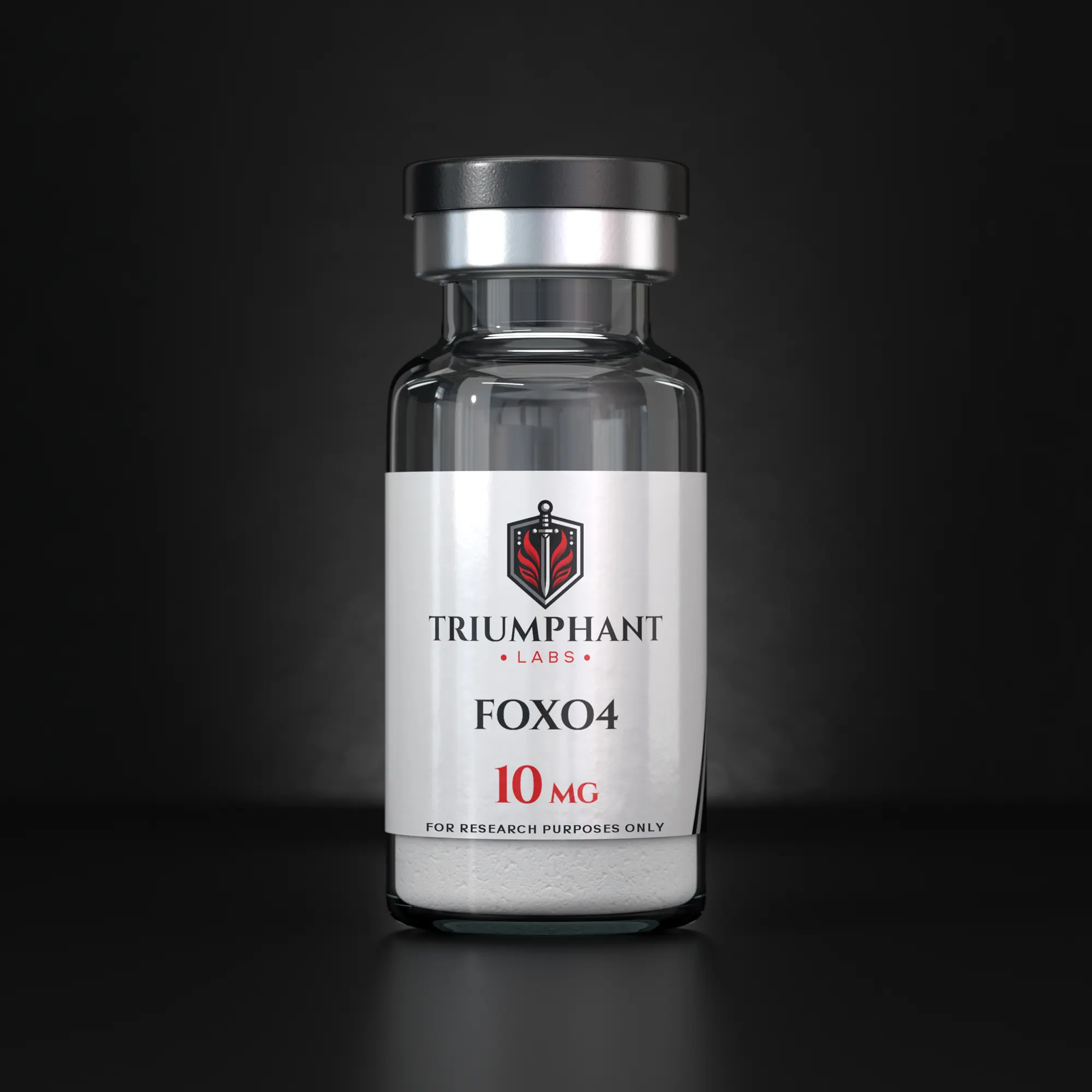
FOXO4 10mg
$179.00
FOXO4 is a peptide at the cutting edge of senolytic and longevity research, studied for its potential role in selectively targeting senescent cells. This 10mg research-grade formulation has captured significant scientific attention among researchers exploring cellular aging, apoptosis regulation, and the emerging field of senescent cell clearance as a strategy for understanding age-related biological decline.
FOXO4 is a member of the forkhead box transcription factor family, a group of proteins that play critical roles in regulating gene expression related to cell cycle control, apoptosis, and stress resistance. In the context of modern longevity and aging research, FOXO4 has gained particular prominence through its association with senescent cells, aged and damaged cells that have ceased dividing but resist programmed cell death. The interaction between FOXO4 and the tumor suppressor protein p53 has become a focal point for researchers investigating how senescent cells evade apoptosis and accumulate in tissues over time, contributing to what is broadly understood as the aging phenotype.
Research Interests and Potential Applications
FOXO4 research sits at the frontier of cellular aging science, with investigations spanning several interconnected and rapidly evolving areas of biology including:
Senescent cell biology, the primary area of FOXO4 research where scientists examine how the FOXO4 and p53 interaction enables damaged cells to resist natural programmed death. Senolytic research, an emerging field exploring compounds and mechanisms capable of selectively clearing senescent cells from tissues without affecting healthy cell populations. Longevity and healthspan biology, where researchers investigate the downstream effects of senescent cell accumulation on tissue function, inflammation, and systemic aging markers. Cellular apoptosis regulation, with studies focused on understanding how disrupting the FOXO4 and p53 interaction influences the fate of senescent cells in preclinical models. Tissue rejuvenation research, an area of growing scientific interest examining whether targeted senescent cell clearance can influence markers of tissue health and biological age in experimental settings.
Mechanism and Commonly Discussed Function
The scientific interest in FOXO4 as a research peptide centers on a specific and well-characterized molecular interaction. In senescent cells, FOXO4 is understood to interact with p53 within the cell nucleus, effectively sequestering p53 and preventing it from initiating the apoptotic cascade that would normally lead to cell death. This interaction is believed to be a key mechanism through which senescent cells maintain their survival despite being recognized as damaged or dysfunctional by the body’s own regulatory systems.
Research has explored the use of a modified FOXO4 peptide, designed to competitively interfere with this FOXO4 and p53 interaction. By disrupting this pro-survival signal, the peptide is proposed to restore p53’s ability to trigger apoptosis specifically in senescent cells, potentially allowing the body to clear these accumulated cells in a targeted manner. The selectivity of this proposed mechanism for senescent over healthy cells is a central point of scientific interest and ongoing investigation in the field.
Why the Research and Wellness Community Is Interested
The accumulation of senescent cells is one of the most widely discussed hallmarks of biological aging, and the search for safe and selective strategies to address this accumulation has become a major focus of longevity science. FOXO4 research sits directly at this frontier, offering a molecularly specific approach to studying senescent cell biology that has attracted attention from academic researchers, biotechnology scientists, and advanced wellness professionals alike.
As the longevity research community continues to grow and the science of cellular aging matures, compounds that offer mechanistic insight into senescence and apoptosis regulation are increasingly valued. FOXO4 represents a rare combination of scientific specificity and broad biological relevance, making it one of the more intellectually compelling peptides in the current research landscape.
Product Quality and Formulation
This FOXO4 peptide is produced to research-grade standards with verified sequence fidelity, rigorous purity assessment, and confirmed potency per 10mg vial. Given the precision required for meaningful senolytic and apoptosis research, synthesis accuracy and quality control are held to the highest standards throughout production. Researchers can rely on a consistent and well-characterized compound that meets the demands of serious cellular aging investigation.
FOXO4 stands as one of the most scientifically significant peptides in contemporary longevity and cellular aging research. For scientists and advanced wellness professionals exploring the mechanisms of senescence, apoptosis regulation, and the emerging field of senolytic biology, this formulation provides a premium and dependable research foundation for work at the very edge of aging science.
Be the first to review “FOXO4 10mg”
Related products

Reviews
There are no reviews yet.